Beyond the Mirror: 5 Health Metrics Every Man Should Track After 40
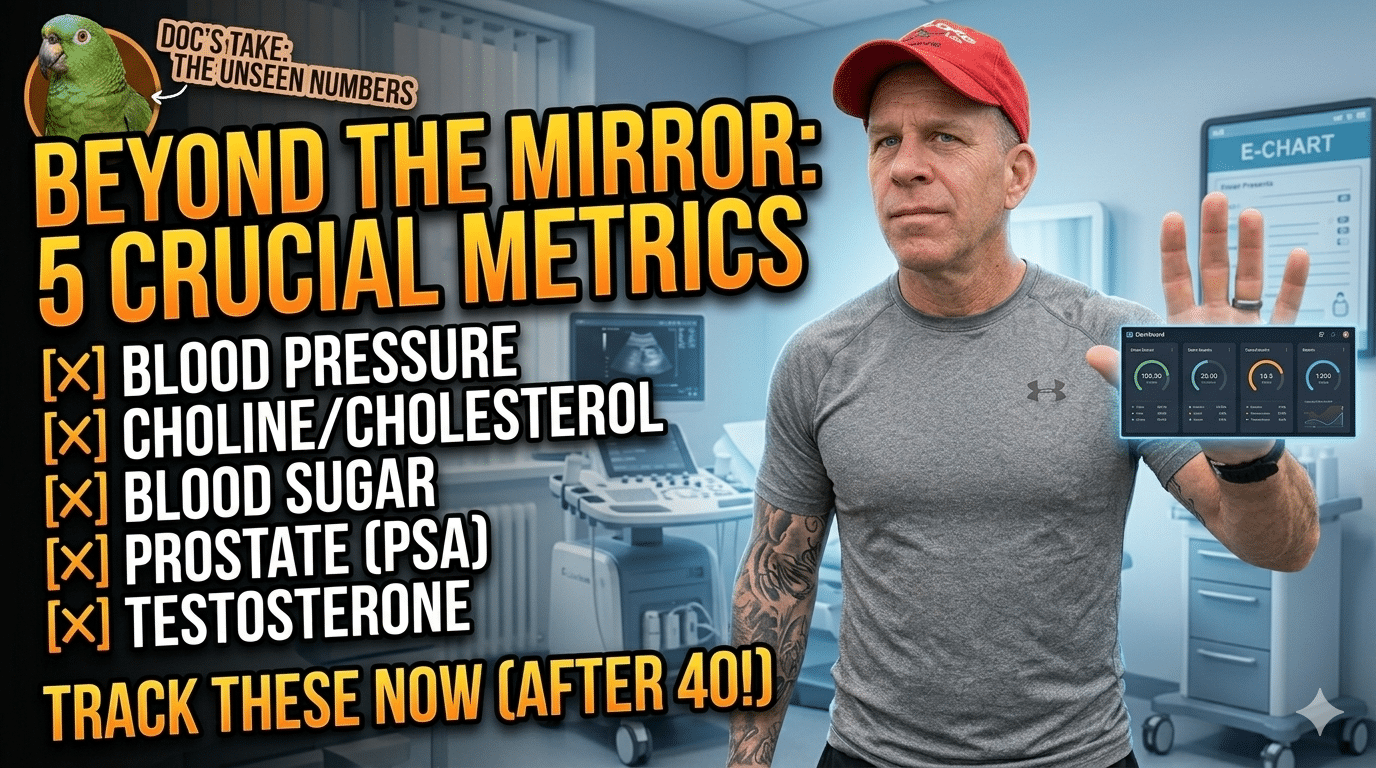
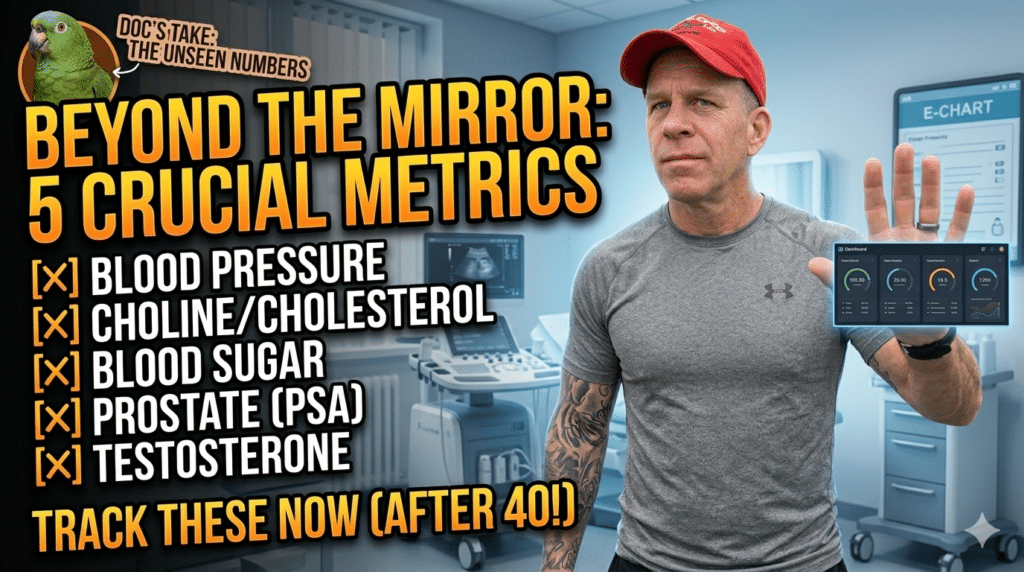
We spend an enormous amount of time looking in the mirror. We assess our waistline, we check the biceps, we lament the receding hairline or the new gray. But here is the brutal truth: the mirror is the worst health diagnostic tool you possess. Your reflection can tell you if your shirt fits, but it cannot tell you if your heart is struggling, if your liver is fatty, or if your hormonal baseline is silently eroding your muscle mass.
When you cross the threshold into your 40s, the "blind optimism" strategy of health—where you assume that because you feel "fine," you must be healthy—stops working. The biological debt of your 20s and 30s begins to come due. If you want to be a father, a professional, and a man who is capable of doing more than just "getting by" for the next four decades, you need to stop guessing and start measuring.
Health is not just a feeling; it is a data set. By tracking these five critical metrics, you move from passive observation to active management. You stop being a victim of your biology and start being the architect of your own longevity.
1. The Waist-to-Height Ratio (The "Silent" Risk)
Forget the Body Mass Index (BMI). BMI was designed for populations, not individuals, and it fails to differentiate between a man with 15% body fat and a man with 30% body fat. The metric you actually need is your Waist-to-Height Ratio.
Why? Because fat stored around the midsection—visceral fat—is metabolically active. It’s not just sitting there; it’s pumping inflammatory cytokines into your bloodstream and pushing your organs to the brink. To calculate this, take a tape measure around your waist (at the level of your belly button, not your pant line) and divide that number by your height in inches. A healthy target is to keep that ratio at **0.5 or less**. If your waist circumference is more than half your height, you are at a significantly increased risk for metabolic syndrome, heart disease, and diabetes. It’s a simple, free, and incredibly honest metric.
2. ApoB (The Real Cholesterol Metric)
Most men over 40 have seen a standard cholesterol panel. You look at LDL, HDL, and Triglycerides. But those are essentially proxies. The most accurate predictor of cardiovascular risk is your **ApoB (Apolipoprotein B)**.
Think of it this way: LDL cholesterol tells you how much "stuff" is in your blood, but ApoB tells you the number of particles that are actually capable of embedding themselves into your artery walls and causing plaque buildup. You could have a "normal" LDL score, but a high number of small, dangerous particles that are currently wreaking havoc. You don’t need to be a cardiologist to track this, but you do need to ask your doctor to add it to your blood work. It is the single most important number for ensuring that you don’t have a sudden cardiac event before you reach your 60s.
3. Fasting Insulin (The Pre-Diabetes Early Warning)
We often check for diabetes by looking at Hemoglobin A1c or fasting glucose. But these are trailing indicators—they show you that you are already in trouble. Fasting Insulin is a leading indicator. It shows you how hard your pancreas is working to keep your blood sugar in check.
If your fasting insulin is creeping up, it means your body is becoming insulin resistant. This is the root cause of almost every "lifestyle" disease we face in middle age: high blood pressure, type 2 diabetes, fatty liver disease, and even Alzheimer’s (which many researchers now call "Type 3 Diabetes"). Ideally, you want your fasting insulin to be as low as possible. When this number rises, your body is effectively telling you: "I am becoming tired of processing your carbohydrates." Listen to it.

4. Grip Strength (The Longevity Proxy)
This sounds like a gym-bro metric, but it is actually one of the most robust biomarkers for overall physical resilience. Research consistently shows that grip strength is a phenomenal predictor of all-cause mortality, cardiovascular health, and even cognitive function in aging men.
Think of grip strength as a barometer for your systemic muscle health. If you are losing grip strength, you are losing muscle fiber across your entire body. When we lose muscle, we lose the ability to balance, the ability to regulate blood sugar, and the ability to recover from illness or injury. A simple hand dynamometer is cheap and effective. Track this. If it’s trending downward, it’s not just your hands getting weaker—it’s a signal that you need to prioritize strength training and protein intake immediately.
5. The Resting Heart Rate Variability (HRV)
We are obsessed with our Resting Heart Rate, which is great, but Heart Rate Variability (HRV) is the "pro" version of that metric. It measures the variation in time between each heartbeat, and it is the best proxy we have for the state of your Autonomic Nervous System.
A high HRV means your body is resilient, adaptable, and balanced. A low HRV—or a sudden drop in your personal baseline—is a flashing red light. It says: "You are not recovering." It tells you that your body is currently fighting off a virus, or that your stress levels (work, lack of sleep, poor nutrition) are overloading your system. Tracking your HRV gives you permission to be smart. If your HRV is in the basement, you don’t hit a heavy squat session—you take a walk, you prioritize sleep, and you recover. It is the ultimate tool for balancing performance with longevity.
The Takeaway: Stop Guessing
Most men over 40 live in a state of "managed ignorance." We avoid the doctor because we don't want to hear bad news, and we avoid the data because it’s easier to live in the dark. But bad news doesn't become good news just because you ignored it. It just becomes an emergency later on.
You don't have to obsess over these numbers daily. You just need to create a baseline. Get the blood work. Measure your waist. Buy the dynamometer. Once you have these five numbers, you have a compass. You can see whether your diet is actually working, whether your training is effective, and whether your lifestyle is actually supporting the long, healthy life you say you want for your family and yourself.
The mirror is for checking your style; these metrics are for checking your life. Make the switch.

Joshua Van
Joshua Van is the founder and senior editor of DadBod40. He is committed to moving men beyond surface-level fitness and into deep, evidence-based health. Joshua helps busy fathers integrate rigorous data tracking into their daily lives so they can build bodies that aren't just for show, but are structurally sound for the long haul.