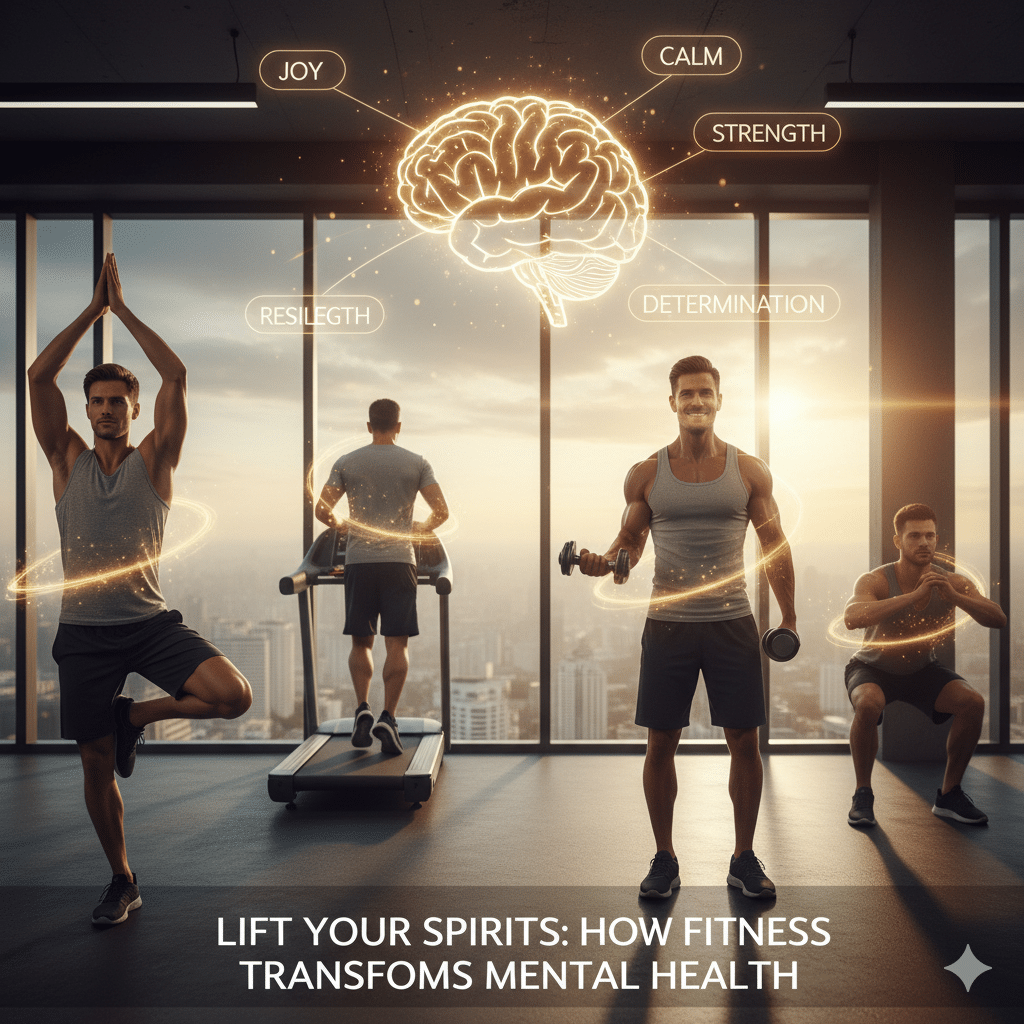

Lift Your Spirits: How Fitness Transforms Mental Health
Man, if you’re a guy pushing past 40 and you’ve stood in front of the mirror wondering what happened to the old spark, then Lift Your Spirits: How Fitness Transforms Mental Health is exactly what I needed to hear back when I was in the thick of it. I’m Joshua Van, founder and senior editor of Dad Bod 40, and yeah, I’ve been there. Hit 42, energy tanked, mood flatlined, sleep was a joke, and I was just grinding through the days for the family. Nothing dramatic, just that quiet drag most of us feel at some point. Then I started moving again not some extreme overhaul, just real stuff I could stick with and it honestly turned things around. That’s why I sat down to write this. Fitness for men over 40 isn’t about looking like a magazine cover. It’s about getting your mind back on track so you actually enjoy the life you’ve built.
I’ve been reading every new study that comes out, putting things to the test in my own garage, and listening to you guys in the emails and comments. What keeps coming up loud and clear is this: moving your body is one of the simplest, most reliable ways to shake off the fog, steady your mood, and feel like yourself again. No hype, just what’s working right now in early 2026. Hang with me and I’ll walk you through it all.
Key Takeaways :
- That fresh February 2026 umbrella review in the British Journal of Sports Medicine shows exercise cuts depression symptoms just about as well as therapy or meds for men our age.
- Strength work really stands out 2025 data backs it up as a solid way to ease those low feelings even when joints are cranky or the belly’s hanging around.
- Lifting and walking crank up BDNF, that stuff your brain needs to stay sharp and keep moods even, and you can feel the difference in a matter of weeks.
- Pair decent food with a couple smart supplements and the whole mental lift gets stronger while the dad bod slowly backs off.
- Start small, keep showing up most guys notice better sleep quick and a real mood shift by week 6 or 8.
Why This Hits Guys Over 40 Harder (And Why Getting Moving Helps So Fast)
After 40, testosterone starts its slow slide, sleep gets choppier, work and family stress piles on, and before you know it you’re short with the kids or staring at the TV wondering why nothing feels fun anymore. I’ve heard it from so many of you: “Josh, I’m not depressed, I’m just… off.”
What finally clicked for me was the latest numbers from early 2026. That huge umbrella review pulled together all the good studies on exercise and mood tens of thousands of folks and the takeaway was straightforward: it works. Aerobic stuff like brisk walks, swimming, or even dancing around the house gave some of the biggest drops in depression and anxiety. Resistance training held its own too. Then the Cochrane review dropped its update in January 2026 saying pretty much the same exercise lines up with therapy or antidepressants for a lot of us, minus the side effects.

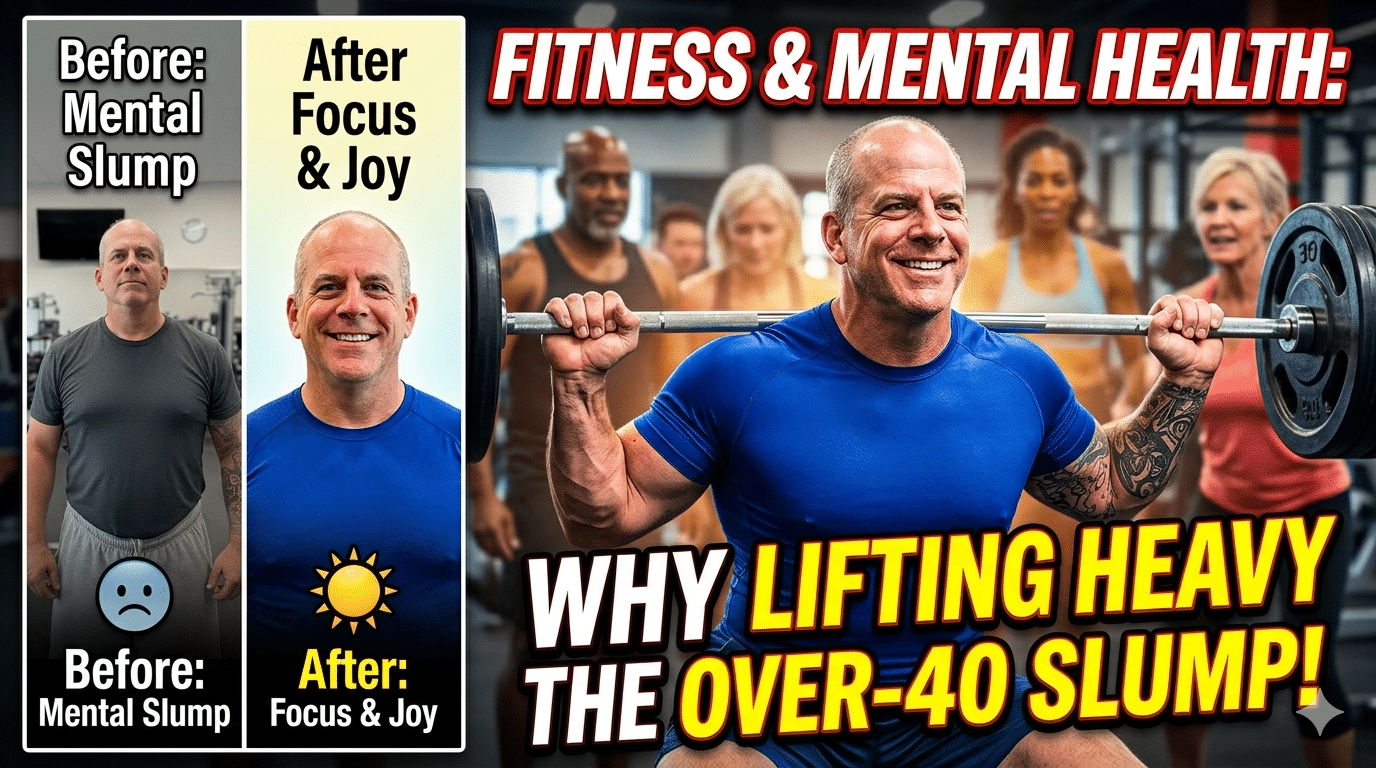
What really got me was how your muscles basically talk to your brain. They send out signals that dial down inflammation and boost the good chemicals like serotonin and dopamine. On top of that, BDNF the brain’s own growth fertilizer goes up, helping new connections form so thinking stays clear and moods don’t swing so wild. After about a month of simple lifts I noticed I wasn’t crashing at 3 p.m., I had more patience at home, and I actually cracked a smile at my own dumb jokes again.
Strength Training: The Quiet Hero for Mental Health After 40
If I could grab every dad reading this by the shoulders and say one thing, it’s that strength training for mental health is seriously underrated. You’re not just putting on muscle. You’re building something that carries over into how you handle everything else.
Two or three sessions a week, 30-45 minutes, squats, deadlifts (or the Romanian version if your back gripes), presses, rows that’s plenty to start. Add a little weight or a couple extra reps when it feels good and your brain eats up that progress. The 2025 review on resistance training showed solid drops in depressive symptoms, and the lift stuck around for the guys who kept at it, even into their 70s in some follow-ups.
I keep mine dead simple in the garage so I’m not gone from the family all day. The spillover is the part nobody talks about enough suddenly you feel more in charge at home, more steady at work. I get emails every week from guys saying they finally feel like the man of the house again instead of just getting by.
Cardio, Yoga, and Keeping It Real So You Actually Stick With It
The February 2026 review loved aerobic work for depression, but shorter, easier sessions did great for anxiety too. Yoga or simple breathing stuff helped cut that shoulder-tight cortisol feeling we all get from desks and driving.
My mix that actually lasts: Monday/Wednesday/Friday lift Tuesday/Thursday – 20-30 minute walk with a podcast Weekend – bike ride or hike with the wife and kids
Nothing fancy. Hits everything and leaves room for real life.
Food and Supplements That Back Up the Mental Wins
You can’t train like a beast and eat junk your brain will let you know. Keep protein decent, throw in some fatty fish or a good omega-3, and load up on colorful veggies and berries to fight off that low-grade inflammation.
After 40 a few things tend to run low even if you eat pretty well. Here’s what I take and tell readers about based on the newest data:
- Vitamin D3 (2,000-4,000 IU with K2) low levels drag on mood and testosterone big time for us.
- Magnesium glycinate (300-400 mg before bed) helps sleep and calms the nerves.
- Omega-3 (at least 1g EPA/DHA) straight-up linked to better mood scores.
- Creatine (5g a day) 2025 studies show it helps thinking and mood too, not just the weights.
Real food always comes first. These just patch the gaps that sneak in with age.
The Simple Starter Plan I Give Every New Guy
Forget trying to be perfect. This is what I hand most readers who are just starting:
Weeks 1-2: Three 30-minute full-body workouts plus a daily 20-minute walk. Focus on doing it right, not heavy. Jot your mood on a 1-10 scale each night and watch it creep up.
Most guys sleep better by week 3, feel the mood pick up by week 6, and by week 8-10 they’re texting me “I actually feel like me again.” Mike from Dallas hit me up last month: “Josh, I figured this was all talk. Six weeks in, sleeping solid, wife says I’m fun to be around again, and I look forward to the garage.” Stories like his are why I keep writing this stuff.
Straight Talk: It Works Because It Fits Real Life
You don’t need a gym membership, two free hours a day, or to pretend you’re 25. Just start where you are and keep showing up. Your brain, your body, and the people who count on you will notice the difference.
Frequently Asked Questions
Q: Can lifting actually replace my antidepressants?
A: For a lot of guys with mild to moderate stuff, the 2026 reviews say it can work as well as therapy or meds. Always run it by your doctor first, but plenty of us make fitness the main tool or a strong helper.
Q: I’m 55 with bad knees what’s safe?
A: Bands, seated stuff, swimming, walking. The data shows lighter movement still helps plenty. Ease in slow.
Q: How soon until I notice a change?
A: Better sleep and energy often show up in 2-3 weeks. The fuller mood shift usually lands between 4-8 weeks if you stay consistent.
Q: Do I need supplements if my diet’s okay?
A: Food first, always. But after 40 those vitamin D, magnesium, and omega-3 shortfalls pop up a lot even with solid eating.
Q: I hate the gym what else counts?
A: Then skip it. Bodyweight at home, hikes, shooting hoops with the kids—whatever you’ll actually do is the right choice.
Q: Does lifting really help testosterone enough to notice?
A: It slows the natural drop and helps your body use what you’ve got better. Stack it with good sleep and food and the difference adds up.
References
- Effect of exercise on depression and anxiety symptoms: systematic umbrella review with meta-meta-analysis. British Journal of Sports Medicine, February 2026.
- Exercise for depression. Cochrane Database of Systematic Reviews, January 2026.
- Chang Y, et al. Resistance training for depression: systematic review and meta-analysis of randomized controlled trials. Frontiers in Psychology, 2025.
- Gholami F, et al. Exercise training alters resting brain-derived neurotrophic factor concentration in older adults: A systematic review with meta-analysis. Experimental Gerontology, 2025.
- Supporting data on omega-3, vitamin D, magnesium, and creatine from recent PubMed reviews through early 2026.
There you go, brother from one guy who’s been exactly where you might be right now to another. Lift Your Spirits: How Fitness Transforms Mental Health isn’t some fancy theory. It’s the most straightforward upgrade most of us over 40 can grab. Lace up your shoes or grab a couple dumbbells today. Even one walk is a win. You’ll thank yourself, and so will everyone around you.
Drop a comment with where you’re at I read them all and love talking real life. You’ve got this.
Stay strong, Joshua Van Founder & Senior Editor, Dad Bod 40