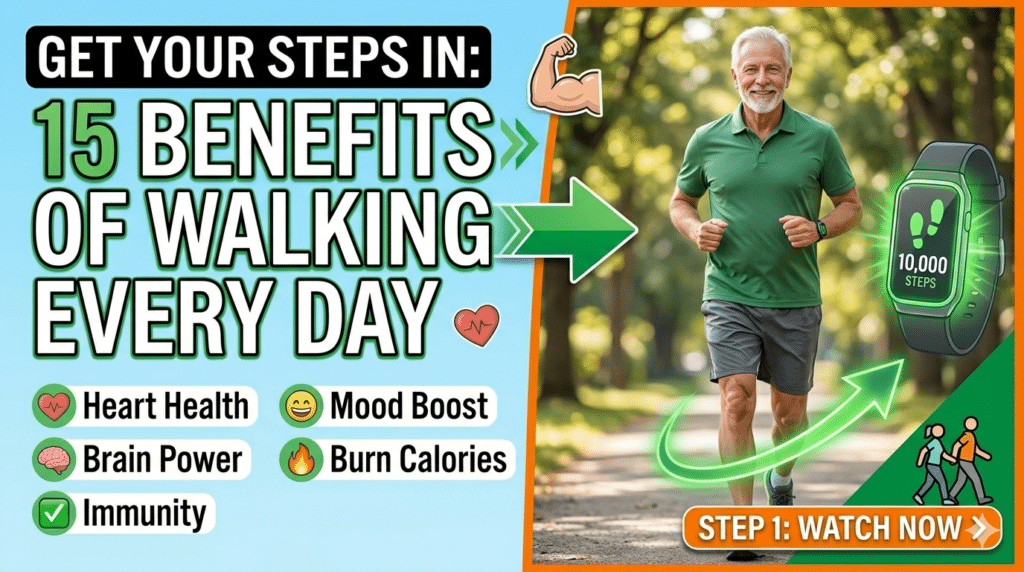
Get Your Steps In: 15 Benefits of Walking Every Day
If you’re a man over 40, you’ve likely been bombarded with the idea that unless you’re gasping for air on a treadmill or throwing around heavy iron five days a week, you’re not really "training." We’ve been conditioned to believe that fitness is a zero-sum game of intensity. But what if the most effective tool for your long-term health was something you’ve been doing since you were a toddler?
Walking is the most underrated, high-leverage habit in the DadBod40 arsenal. It requires no gym membership, creates zero "recovery debt," and can be performed anywhere. In this 1,200-word deep dive, we explore why getting your steps in is the single best move you can make for your heart, your waistline, and your sanity.
Why Walking is the Foundation of Men’s Fitness
Before we break down the 15 benefits, we need to talk about NEAT (Non-Exercise Activity Thermogenesis). This is the energy you burn for everything that isn't formal exercise. For the average man, NEAT makes up a much larger portion of his daily "calorie burn" than an hour at the gym ever will. By increasing your daily steps, you are effectively turning your body into a 24/7 fat-burning furnace without the fatigue that comes from "cardio."
Walking is a metabolic secret weapon. A brisk walk primarily uses fatty acids for fuel. Unlike high-intensity running, which can trigger massive spikes in hunger hormones (ghrelin), walking keeps your appetite stable. For men over 40, walking 10,000 steps a day can be the difference between a 500-calorie surplus and a 500-calorie deficit—the holy grail of fat loss.
Heart disease is the leading cause of death for men globally. Walking increases your heart rate enough to strengthen the cardiac muscle and improve circulation without the excessive strain of a marathon. Research indicates that 30 minutes of walking daily can slash coronary heart disease risk by nearly 20%.
Type 2 diabetes often starts with insulin resistance in your 40s. Walking after a meal acts as a "glucose clearing" event. Your muscles contract and pull sugar out of your blood to use for energy, blunting the insulin spike that would otherwise store that meal as belly fat.
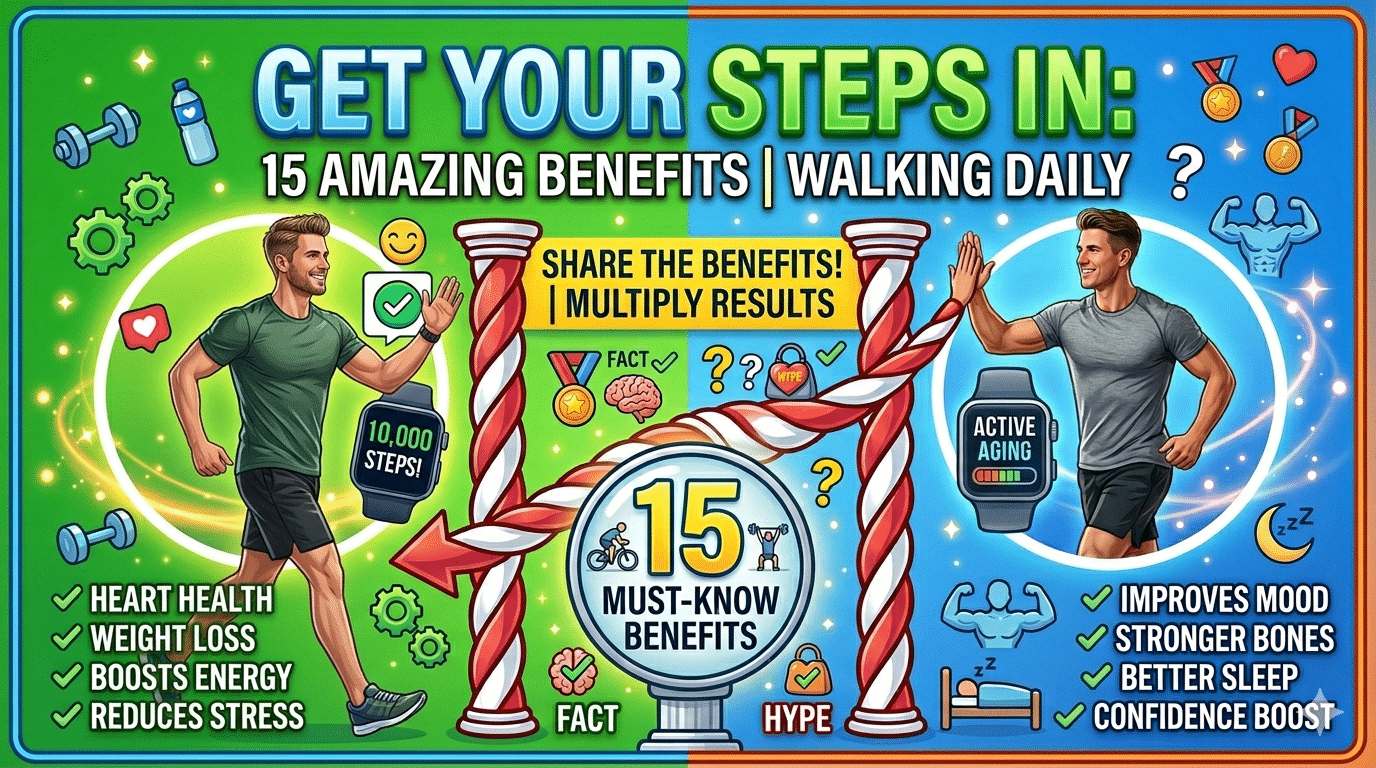
Chronic stress produces cortisol, which actively breaks down muscle and deposits fat around your organs. Walking—specifically in nature—lowers your heart rate and shifts your body from the "sympathetic" (fight-or-flight) state into the "parasympathetic" (rest-and-digest) state.
While walking doesn't "build" testosterone like heavy squats do, it protects it. Excess body fat contains an enzyme called aromatase, which converts your testosterone into estrogen. By using walking to stay lean, you are directly preventing the hormonal "theft" that causes the dreaded dad bod.
As we age, our joints can become stiff and painful. Walking increases blood flow to joint cartilage, which doesn't have its own direct blood supply. It essentially "greases the gears," keeping your knees, hips, and lower back mobile so you can continue to lift heavy in the gym.
Walking outdoors in the morning helps set your "biological clock." Morning sunlight exposure regulates melatonin production. Men who walk regularly tend to fall asleep faster and reach the "REM" and "Deep Sleep" stages more consistently, leading to better recovery and morning energy.
Walking stimulates the production of Brain-Derived Neurotrophic Factor (BDNF). Think of this as "Miracle-Gro" for your brain. It helps repair old brain cells and build new ones, reducing "brain fog" and protecting against age-related cognitive decline.
Stuck on a work problem? A famous Stanford study showed that walking increases creative inspiration by an average of 60%. The rhythmic nature of walking allows your subconscious mind to "untangle" problems that you can't solve while sitting at a desk.
Walking helps stimulate the natural "peristalsis" of your digestive tract. It keeps things moving, reducing bloating and acid reflux—two common complaints for men as their metabolism begins to shift in their 40s.
Moderate walking increases the circulation of immune cells, allowing them to patrol your body for pathogens more effectively. Daily walkers take significantly fewer sick days than their sedentary peers.
Regular walking makes your heart a more efficient pump. Over time, this reduces the pressure on your arteries. For many men, a dedicated walking habit can bring "borderline" high blood pressure back into the safe zone without the need for medication.
Walking is one of the few exercises where you can actually have a conversation. Walking with your partner or kids is a powerful way to build relationships without the interference of smartphones. For men, "shoulder-to-shoulder" communication is often where the best conversations happen.
While not as intense as a deadlift, walking is a weight-bearing exercise. Every step sends a signal to your bones to stay dense and strong, which is vital for preventing fractures and maintaining posture as you move toward your 50s and 60s.
The best thing about walking is that it has a "zero-tax" cost on your central nervous system. You can walk 12,000 steps and still have the energy for a PR in the gym the next morning. In fact, by increasing blood flow to sore muscles, walking actually speeds up your recovery from heavy lifting.
How to Integrate Walking into Your Busy Life
You don't need a three-hour block to see results. The key is habit stacking. Here are three simple ways to get your steps in without "finding time":
- The 10-Minute Post-Meal Rule: Walk for 10 minutes after every meal. That's 30 minutes and ~3,000 steps done automatically.
- The "Phone Pacing" Habit: Never sit during a phone call. If you're on a meeting, pace your office or walk the hallway.
- The Remote Parking Hack: Always park at the back of the lot. Those extra 200 steps add up to miles over a year.
The Bottom Line: Just Put One Foot in Front of the Other
Walking is the simplest, most effective health hack available to the modern man. It isn't just "filler" movement; it is a fundamental requirement for a functioning human body. If you want to stay lean, keep your heart strong, and maintain your mental edge well into your 50s and 60s, you must prioritize your daily steps.
Don't wait for the "perfect" time or the "perfect" weather. Open your front door and start moving. Your future self will thank you for every single step.
Ready to build a body that lasts? Join the DadBod40 newsletter for science-backed training and nutrition designed specifically for men over 40.

J.V. CHARLES – DadBod40
J.V. Charles is a fitness coach and longevity researcher dedicated to helping men over 40 regain their strength and vitality through practical, no-BS strategies that fit into a busy life.