
Why Cooling Potatoes Lowers Their Glycemic Load (And Why Men Over 40 Should Care)
Potatoes get a bad rap in fitness circles. High glycemic index, blood-sugar spike, insulin surge — the kind of thing that makes guys over 40 worry about belly fat and energy crashes. But there’s a simple kitchen trick that changes everything: cook them, cool them in the fridge, then reheat gently. This one step can slash the glycemic load by 20–50% and turn a regular potato into a performance food that supports muscle recovery, fat loss, and steady energy.
This isn’t some bro-science hack. It’s backed by solid research on resistant starch. In this practical guide for men over 40 you’ll learn exactly why cooling works, how much it really lowers glycemic load, the best way to do it, meal ideas that taste great, and how to use this trick without giving up the foods you love. No complicated science lectures — just real-world strategies that fit a busy life and actually move the scale in the right direction.
What Glycemic Load Actually Means for Men Over 40
Glycemic load (GL) measures how much a serving of food raises blood sugar. Potatoes have a high GL (around 20–30 for a medium baked potato) because their starch breaks down quickly into glucose. After 40, your body becomes more insulin resistant. That spike and crash can lead to more fat storage around the midsection, slower recovery from workouts, and afternoon energy slumps.
Lowering the GL of potatoes without giving them up means you can still enjoy them as a carb source that fuels training and keeps you full — without the metabolic punishment.
The Science: How Cooling Creates Resistant Starch
When you cook potatoes, the starch gelatinizes and becomes highly digestible. But when you cool them (especially in the fridge for 12–24 hours), some of that starch retrogrades into resistant starch. This type of starch acts more like fiber than regular carbs:
- It resists digestion in the small intestine
- It reaches the colon where good bacteria ferment it
- It produces short-chain fatty acids that improve insulin sensitivity
Studies show cooled potatoes can have 20–50% lower glycemic response than freshly cooked ones. One trial found that eating cooled then reheated potatoes lowered blood-glucose response by up to 44% compared to hot potatoes.
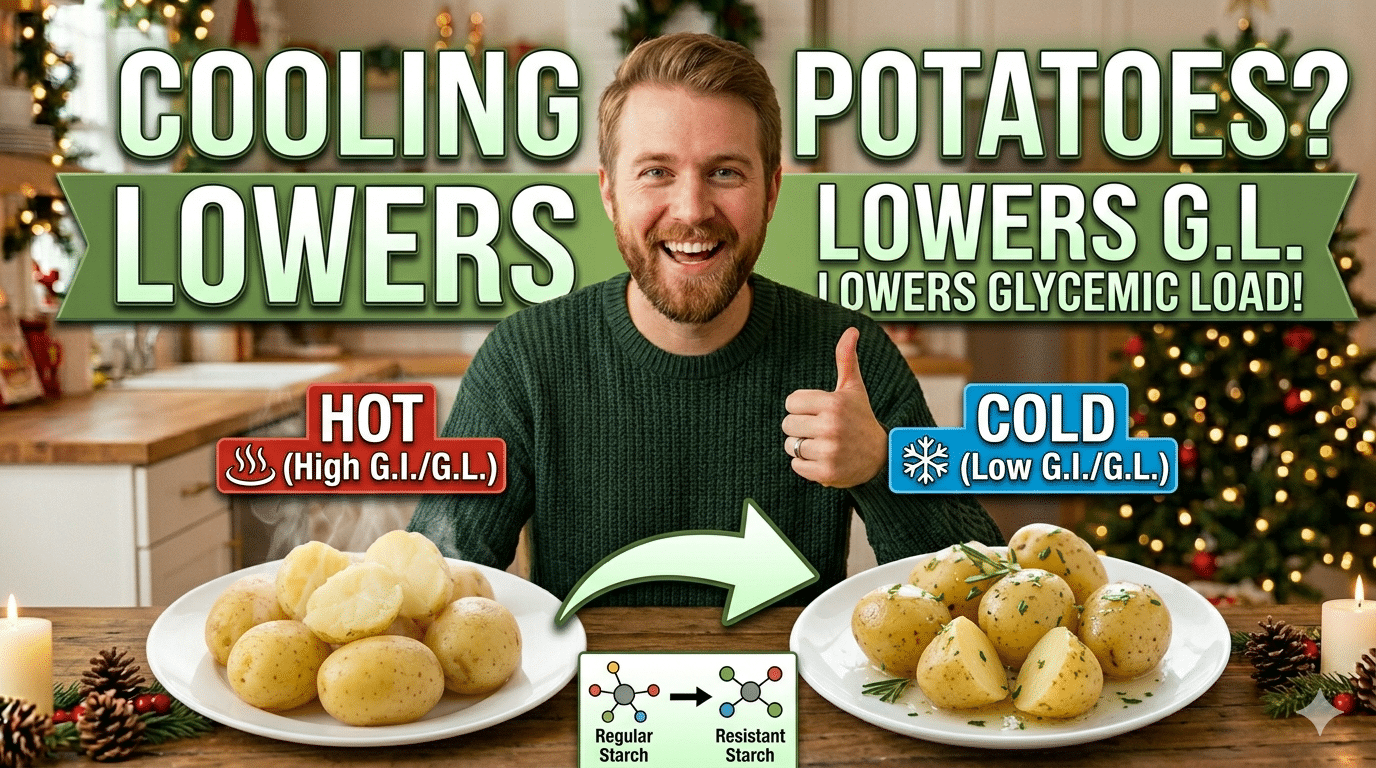
Step-by-Step: How to Cool Potatoes the Right Way
It’s dead simple:
- Boil, bake, or air-fry potatoes as usual
- Let them cool to room temperature (about 30 minutes)
- Refrigerate uncovered or loosely covered for at least 12 hours (24 hours is better)
- Reheat gently — microwave on low, air-fry at 350°F, or eat cold in salads
Pro tip: Don’t overcook them initially. Firmer potatoes form more resistant starch when cooled. Red, fingerling, or new potatoes work especially well.
Practical Meal Ideas That Use Cooled Potatoes
Here are 7 dad-approved meals that turn cooled potatoes into muscle-building, fat-burning fuel:
- Post-Workout Breakfast — Cooled roasted potatoes + 4 eggs + spinach + hot sauce
- Lunch Bowl — Cooled potato salad with tuna, celery, olive oil, and mustard
- Dinner Side — Air-fried cooled potatoes tossed with garlic and rosemary next to grilled steak
- Recovery Snack — Cold potato wedges with Greek yogurt dip and smoked salmon
Each meal delivers steady carbs, high protein, and the extra fiber from resistant starch — perfect for staying lean while training hard.
Additional Benefits Beyond Blood Sugar Control
Resistant starch feeds beneficial bacteria and reduces inflammation — exactly what men over 40 need for faster muscle repair.
Fat Loss SupportLower insulin response means less fat storage. Many guys report easier fat loss when they make this one change.
Better Sleep & EnergyStable blood sugar prevents the 3 p.m. crash and supports overnight recovery.
Common Mistakes and How to Avoid Them
- Reheating on high heat — this destroys some resistant starch
- Expecting instant results — give it 2–3 weeks of consistent use
- Over-relying on potatoes — still balance with protein and healthy fats
- Skipping the cooling step — no resistant starch forms if you eat them hot
One Simple Trick That Makes Potatoes Work for You Again
Cooling potatoes after cooking is one of the easiest, cheapest, and most effective nutrition upgrades a man over 40 can make. It turns a food that used to spike blood sugar into a steady-energy, gut-friendly carb source that supports muscle, fat loss, and long-term health.
You don’t have to give up potatoes. You just have to cook them smarter. Try it this week: make a big batch, cool them overnight, and use them in 2–3 meals. You’ll feel the difference in energy and recovery within days.
Your body is listening to what you eat. Give it the right signals and it will reward you with better results in the gym and in the mirror.
Want weekly meal plans, full DadBod40 programs, and more simple nutrition hacks designed for men over 40? Join the free newsletter here — real food, real training, real life.
About the Author

J.V. CHARLES – DadBod40
Helping men over 40 build strength, lose fat, and feel great — with practical, science-backed nutrition hacks that fit real life and deliver real results.