Why Your Metabolism Slows Down at 40 (and How to Reset It)
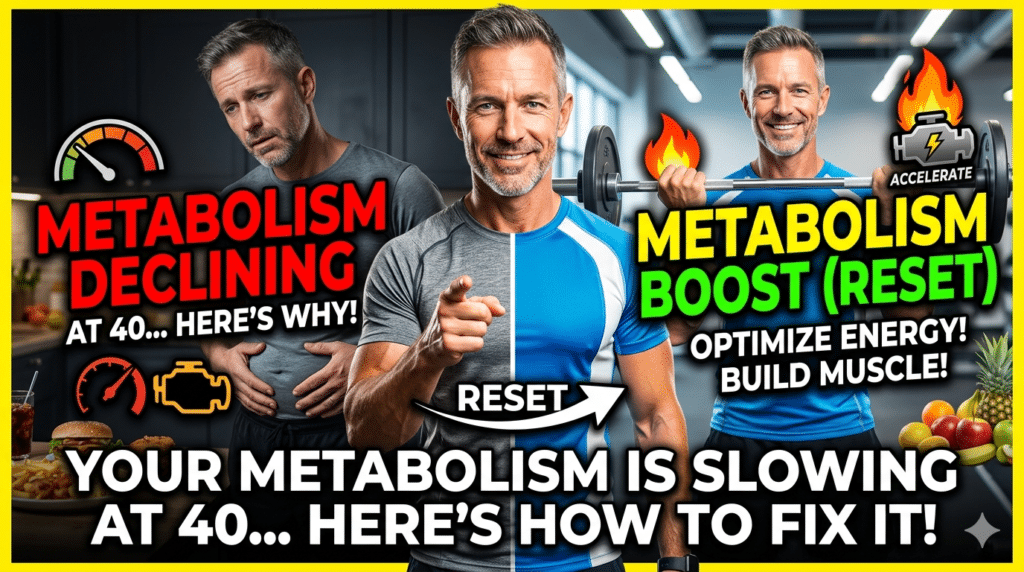
You wake up one morning, look in the mirror, and realize that the same pizza-and-beer routine that didn't affect you at 25 is now manifesting as a permanent "spare tire." It’s a common complaint among men over 40: "My metabolism has just stopped." But is your metabolic engine truly broken, or is it just running on the wrong fuel and outdated software? At DadBod40, we believe that understanding the "why" behind metabolic aging is the first step toward reclaiming your biological edge.
The Great Myth: Is 40 a Metabolic Dead End?
Recent landmark studies have challenged the long-held belief that our metabolism naturally nose-dives the moment we blow out 40 candles. Research suggests that Basal Metabolic Rate (BMR)—the calories you burn just staying alive—remains remarkably stable between the ages of 20 and 60. So, if the biological "factory settings" aren't changing that much, why does it feel so much harder to stay lean?
The answer isn't a "broken" metabolism; it's a lifestyle and hormonal shift that slowly erodes your fat-burning capacity. We aren't fighting an inevitable decline; we are fighting the accumulation of bad habits and physiological neglect. To reset the system, we have to look at the four primary drivers of metabolic health in the 40+ man.
Muscle is metabolically expensive tissue. Every pound of muscle on your frame burns roughly 6-10 calories per day at rest, whereas a pound of fat burns only 2. As we age, we often fall victim to Sarcopenia—the gradual loss of muscle mass. When your muscle "engine" shrinks, your daily caloric furnace cools down, leading to fat gain even if your diet remains unchanged.
1. The Sarcopenia Slide: Losing Your "Engine"
Starting in your 30s, the average man can lose 3% to 5% of his muscle mass per decade. By the time you hit 45, you could be operating with 10% less metabolic "machinery" than you had in your prime. This is the primary reason why "dieting alone" often fails for men over 40. If you lose weight without strength training, you lose muscle, further lowering your BMR and setting yourself up for the dreaded "yo-yo" effect.
The Fix: You must prioritize Resistance Training. This isn't about vanity; it's about metabolic survival. Heavy compound movements—squats, deadlifts, and presses—signal your body that muscle is a necessity, not a luxury. This triggers Muscle Protein Synthesis (MPS), which keeps your metabolic fire burning even while you sleep.
2. The Hormonal Hierarchy: Cortisol vs. Testosterone
At 40, your hormonal profile shifts. Testosterone levels begin to dip by roughly 1% per year, while chronic stress from career and family often keeps Cortisol (the stress hormone) elevated. High cortisol is a metabolic disaster; it encourages fat storage in the abdominal region and breaks down existing muscle tissue for quick energy.
Furthermore, many men develop Insulin Resistance in their 40s. Your cells stop responding efficiently to insulin, leading to higher blood sugar levels and a body that is "locked" in fat-storage mode rather than fat-burning mode. This metabolic inflexibility makes it nearly impossible to access stored body fat for fuel.
| The Metabolic Barrier | The Biological Reason | The 40+ Reset Strategy |
|---|---|---|
| Muscle Loss | Sarcopenia and lower protein synthesis. | Lift heavy 3-4x/week; prioritize 1g protein per lb of bodyweight. |
| Insulin Resistance | High-carb diets and sedentary desk work. | Strategic carb timing (after workouts) and daily walking. |
| Lower NEAT | Decreased unconscious movement (fidgeting, walking). | Aim for 8,000 - 10,000 steps regardless of gym time. |
| Poor Sleep | Cortisol spikes and suppressed Growth Hormone. | 7+ hours of sleep in a cool, dark room. |
3. The "NEAT" Decline: The Silent Metabolic Killer
Non-Exercise Activity Thermogenesis (NEAT) refers to the energy expended for everything we do that is not sleeping, eating, or sports-like exercise. It includes walking to the car, typing, yard work, and even fidgeting. For most men, NEAT accounts for a much larger portion of daily calorie burn than an hour at the gym.
As we reach our 40s, we often become more sedentary. We take the elevator instead of the stairs; we sit in longer meetings; we spend our weekends on the couch recovering from a stressful week. This "lifestyle creep" can result in a drop of 300 to 500 calories burned per day—a gap that no 45-minute workout can fully close.
How to "Reset" Your Fat-Burning Engine
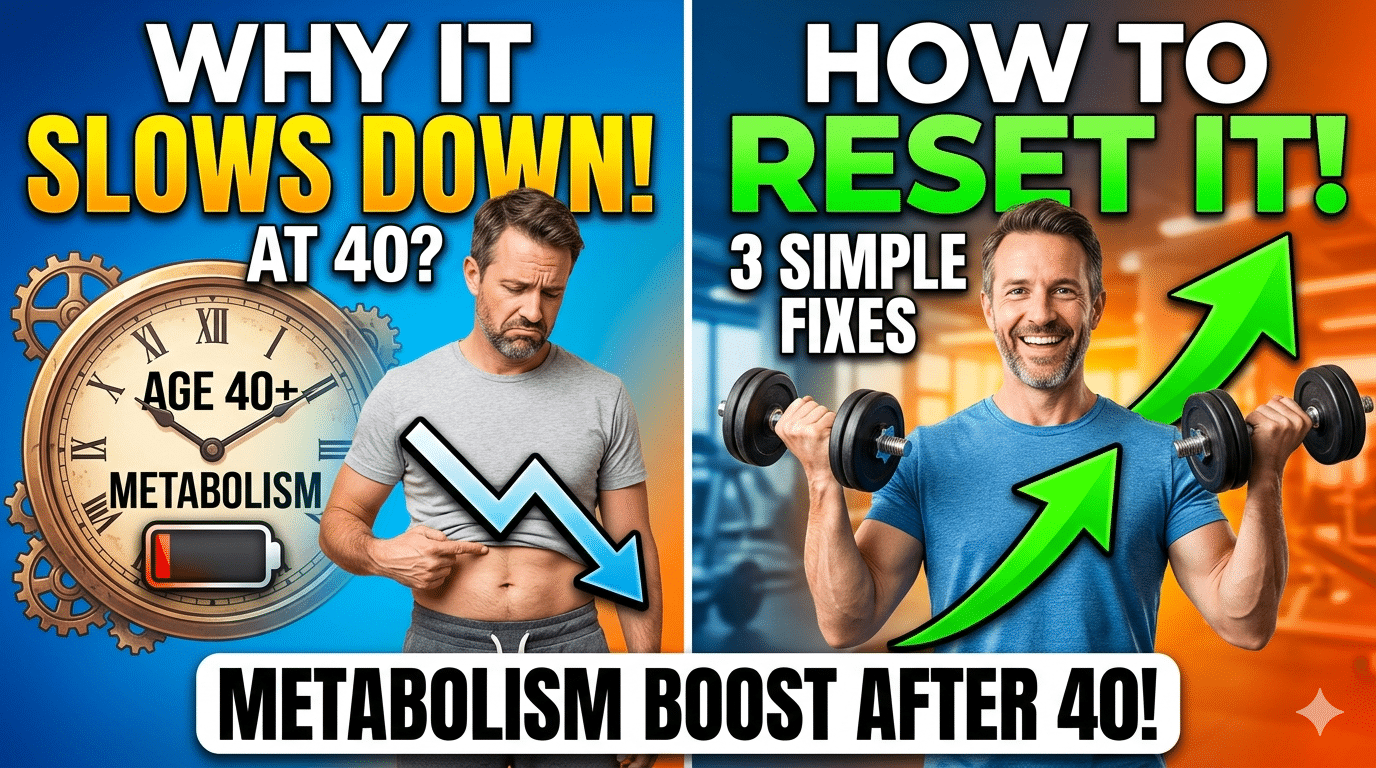
The good news? Your metabolism isn't a one-way street. You can actively "re-program" your body to burn fat more efficiently by focusing on these three pillars:
Pillar 1: Hypertrophy Over Cardio
If you want to reset your metabolism, stop spending hours on the treadmill. While cardio is great for heart health, it does very little for your BMR. Focus on hypertrophy (muscle building). Aim for 8-12 reps of challenging weights. This creates "micro-trauma" in the muscle fibers, requiring your metabolism to work overtime for 48 hours post-workout to repair and rebuild.
Pillar 2: The Protein-First Protocol
Protein has the highest Thermic Effect of Food (TEF). Your body burns roughly 20-30% of the calories in protein just to digest and process it. Compare this to fats (0-3%) and carbs (5-10%). By shifting your macronutrients to favor protein, you are effectively "stoking the furnace" every time you eat. Additionally, protein is essential for maintaining that metabolic-expensive muscle mass we discussed earlier.
Pillar 3: Metabolic Flexibility
Teach your body to switch between burning carbs and burning fat. This is achieved through Strategic Carb Backloading. Eat your carbohydrates primarily after your strength training sessions when your muscles are primed to soak up glucose. This prevents the insulin spikes that lead to fat storage and ensures your body remains "lean and mean."
Conclusion: Reclaim Your Biological Edge
The "slow metabolism" of 40 is not a life sentence; it’s a symptom of a system that needs an upgrade. By reclaiming your muscle mass, managing your hormonal stress, and staying active outside the gym, you can build a physique that is more resilient and energetic than it was a decade ago. Don't let the "Dad Bod" be an inevitability. Reset your engine, fuel it correctly, and get back in the game.

J.V. CHARLES – DadBod40
J.V. Charles is the founder and senior editor of DadBod40. A longevity researcher and performance coach, he has spent the last decade helping men navigate the physical realities of aging without losing their competitive drive. He believes that muscle is the ultimate body armor and that the best years of a man's life should be spent on the field, not on the sidelines.