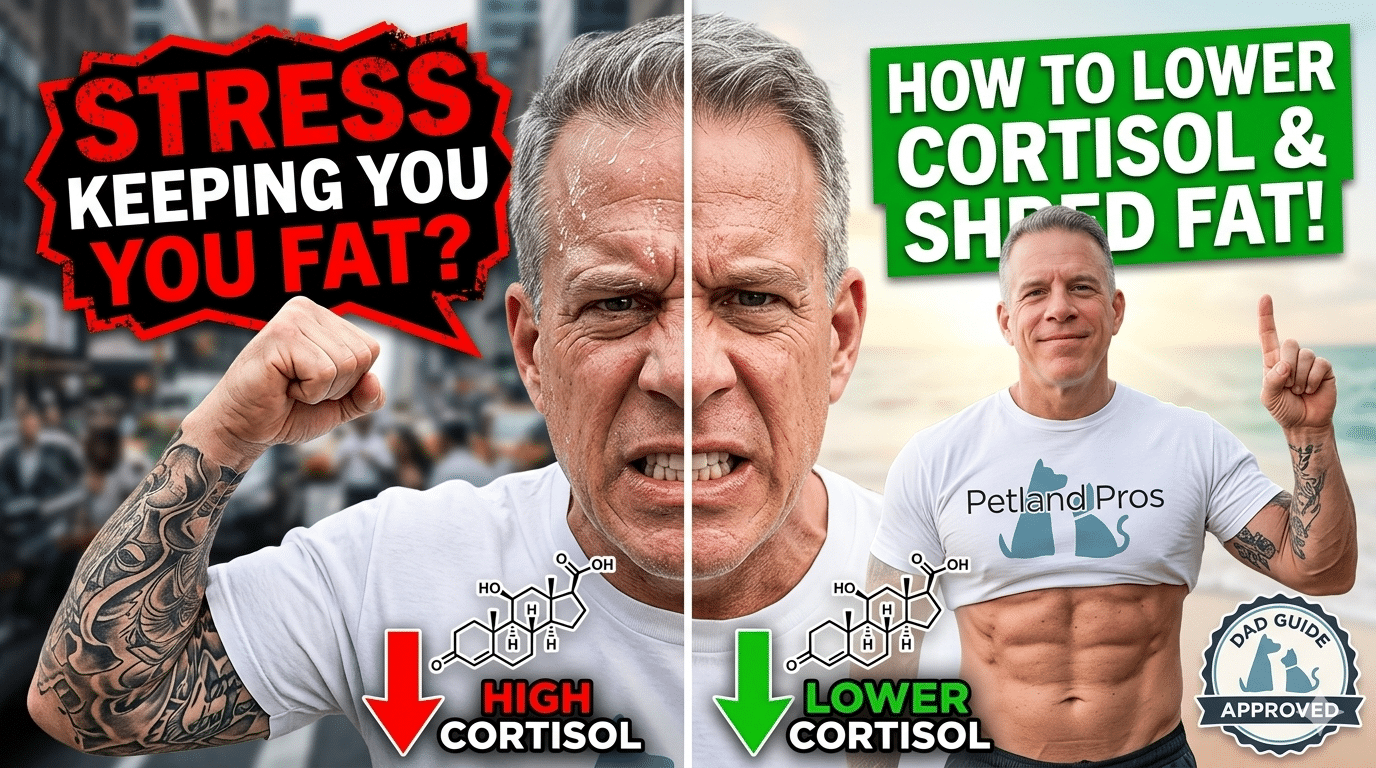
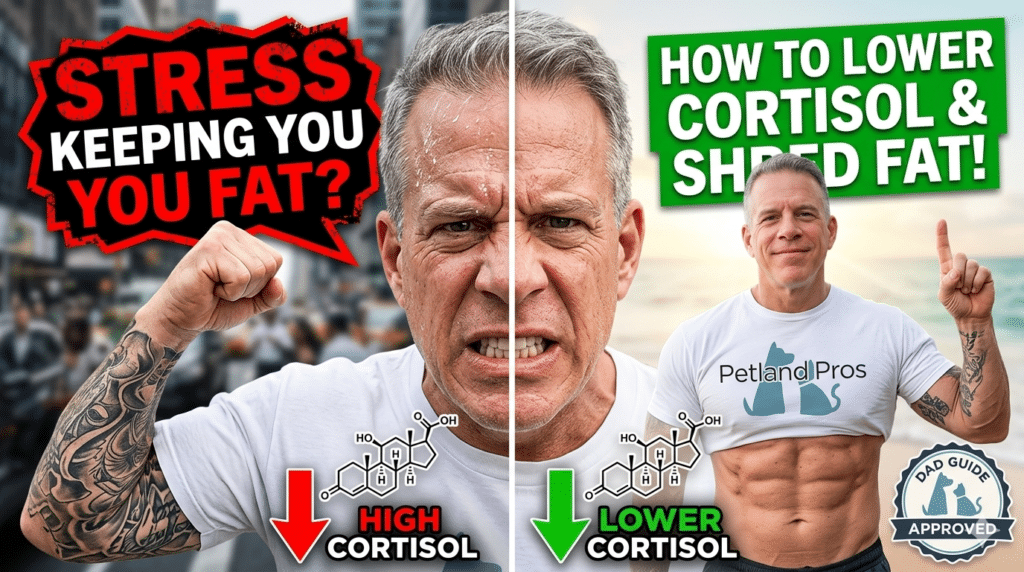
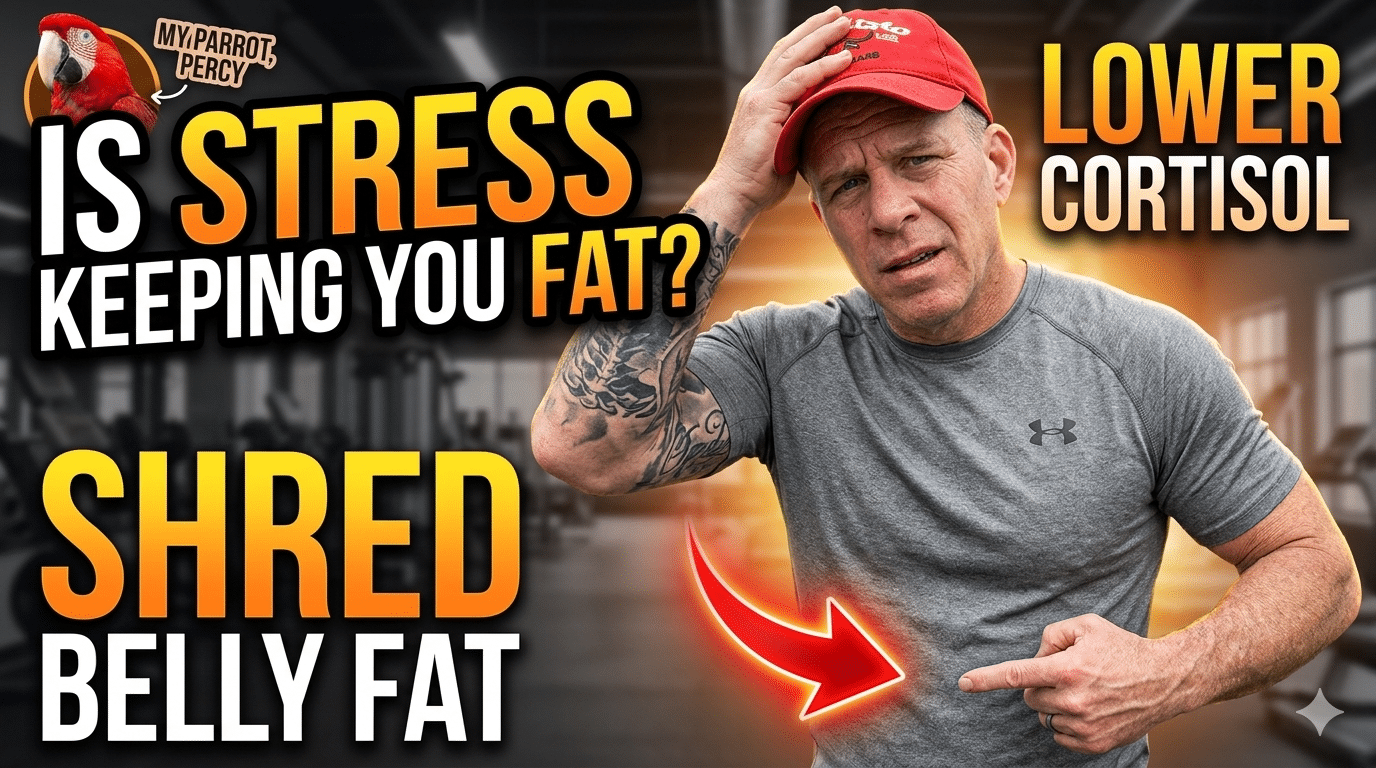
Is Stress Keeping You Fat? How to Lower Cortisol and Shred Belly Fat
Let’s be real for a second. You’ve been putting in the work. You’ve got your protein dialed in, you’re hitting the gym three times a week, and you’re resisting the urge to raid the pantry at 10 PM. You are doing the "right" things. But when you look in the mirror, that stubborn midsection—the one that started making an appearance a few years back—is still sitting there, completely unmoved by your efforts.
It’s frustrating. It makes you want to throw in the towel or, worse, double down on the intensity, thinking you just need to work harder. But what if the problem isn’t your effort? What if the problem is that your body is in survival mode, protecting that belly fat because it thinks you’re under attack?
Welcome to the Cortisol Trap. If you’re a man over 40, you aren't just dealing with metabolism; you’re dealing with a hormonal landscape that is being bombarded by deadlines, family commitments, and the relentless pressure to perform. If you want to finally lose the gut, you have to stop fighting your body and start managing your chemistry.
The Biological Reality: Why Stress Deposits Fat
Cortisol isn’t a "bad" hormone. It’s a survival mechanism. It’s what allowed our ancestors to dodge predators. When you’re under stress—whether it’s a terrifying work presentation or an argument with your spouse—your body dumps cortisol into your bloodstream to mobilize energy. It’s trying to give you the fuel to "fight or flight."
The problem is that our modern stresses don’t require us to run. We just sit at our desks, pulse racing, cortisol flooding our systems. Over time, that chronic elevation is disastrous. Your body begins to think, "Hey, we are constantly under threat, and I need to keep emergency energy stored close by."
Cortisol directly impacts fat storage in three insidious ways:
- Insulin Sensitivity: Cortisol keeps your blood sugar high. High blood sugar triggers insulin. Insulin is a fat-storage hormone. When they work in tandem, your body becomes a machine for packing away abdominal fat.
- The Receptor Density: Abdominal fat cells have a higher concentration of cortisol receptors than fat cells elsewhere. This is why you might notice your arms and legs staying lean while your waistline expands. Your belly is literally hardwired to be the primary storage bin for stress.
- The Muscle Trade-off: Chronic cortisol is catabolic. It actively breaks down muscle tissue for fuel. Since muscle is your metabolic furnace, the more you lose, the easier it becomes to gain fat.
Stop "Grinding" Your Way to Fat Gain
Here is a pill that’s hard to swallow: **Sometimes, your workout routine is making you fatter.** If you are already burnt out at work and struggling to sleep, adding heavy, high-intensity interval training or extreme lifting sessions is just pouring gasoline on the fire. You are adding systemic stress to an already stressed system.
When you are in a high-cortisol state, you need to pivot. You don't need to quit working out, but you need to change the *type* of stimulus you provide to your body. Think of it as "de-loading" your stress, not your weights. True intensity isn't always found in a barbell; sometimes, it’s found in the discipline of knowing when to slow down.
Your 4-Step Cortisol Reset
You don't need to go on a retreat in the woods. You need practical, daily boundaries that tell your nervous system, "You are safe."
1. The Digital Sunset
Your phone is a cortisol machine. The emails, the news, the social media comparisons—it all keeps you in a state of low-grade anxiety. Commit to a "digital sunset." Turn off all work notifications by 7 PM. If you can leave your phone in another room, even better. This gives your brain the quiet it needs to start lowering cortisol production before you hit the pillow.
2. Swap Intensity for Volume
If you're feeling perpetually fried, swap two of your high-intensity sessions for steady, low-impact movement. A 45-minute brisk walk, a bike ride with the kids, or a focused mobility session. These activities don’t trigger a cortisol spike, yet they still keep your metabolism humming and help manage your caloric balance. You aren't "skipping" a workout; you are performing active recovery.
3. Breath-Work is Your Secret Weapon
This sounds like "fluff," but it’s pure physiology. When you are stressed, you take shallow, chest-based breaths. That signals your brain to stay alert. Slow, deep, diaphragmatic breathing (in for 4, hold for 4, out for 4, hold for 4) physically forces your vagus nerve to calm down. Do this for three minutes when you first feel the "work stress" rising.
4. Prioritize "Empty" Time
We are so busy "optimizing" every second of our lives that we have forgotten how to just *be*. Whether it’s reading a book, working on a hobby, or just sitting in silence for five minutes, you need time where you are not "producing" anything. This is not laziness; it is essential biological maintenance.
It’s About the Long Game
If you take anything away from this, let it be this: **You cannot hate your body into a healthier state.** If you are constantly punishing yourself in the gym and stressing over every calorie, you are just spiking your own cortisol and creating a physiological environment that makes it impossible to lose the belly fat you hate. The math of calories-in vs. calories-out is real, but it doesn't happen in a vacuum—it happens inside a human being who is affected by sleep, work, anxiety, and rest.
Being a "fit dad" at 40 isn't just about how much you can squat. It’s about building a life that allows you to perform well *and* recover well. When you finally stop the cycle of chronic stress, you’ll be amazed at how quickly your body stops holding onto that "emergency" fat. It’s not magic. It’s biology. And it’s entirely within your control.
Start small. Fix your sleep tonight. Turn off the phone. Breathe a little deeper. The results—and the relief—will follow. You’ve spent enough time fighting your body; it’s time to start listening to it.

Joshua Van
Joshua Van is the founder and senior editor of DadBod40. He is dedicated to helping men over 40 move past "grind culture" and into an era of intelligent, sustainable performance. Joshua bridges the gap between scientific hormonal health and the practical realities of being a high-achieving, busy dad.