
How to Tame Blood Sugar Spikes after Eating Potatoes
Potatoes are one of the most comforting, satisfying carbs on the planet. Baked, roasted, mashed, or air-fried — they taste great and fuel hard training. But for men over 40, that familiar potato meal can come with a hidden cost: a sharp blood-sugar spike followed by the inevitable crash, extra belly fat storage, and sluggish afternoons. Many guys assume the only solution is to give up potatoes entirely. That’s not true.
You can keep potatoes in your rotation and still stay lean, energetic, and insulin-sensitive. The secret is a handful of simple, science-backed strategies that dramatically lower the glycemic impact without sacrificing flavor or volume. This practical guide shows you exactly how to tame blood sugar spikes after eating potatoes — using the cooling trick, smart pairings, portion control, timing, and a few extra hacks that work especially well for men over 40. No extreme low-carb rules. Just real-world methods that let you enjoy potatoes while protecting your health and progress.
Why Potatoes Spike Blood Sugar in the First Place
Potatoes are mostly starch. When you cook them hot and eat them fresh, the starch gelatinizes and breaks down quickly into glucose. A medium baked potato can have a glycemic index of 78–85 — higher than many sugary snacks. After 40, insulin sensitivity naturally declines, so those spikes feel bigger, last longer, and promote more fat storage around the midsection.
The good news? You can change how your body processes potato starch with one simple step most guys never try.
The #1 Trick: Cool Potatoes to Create Resistant Starch
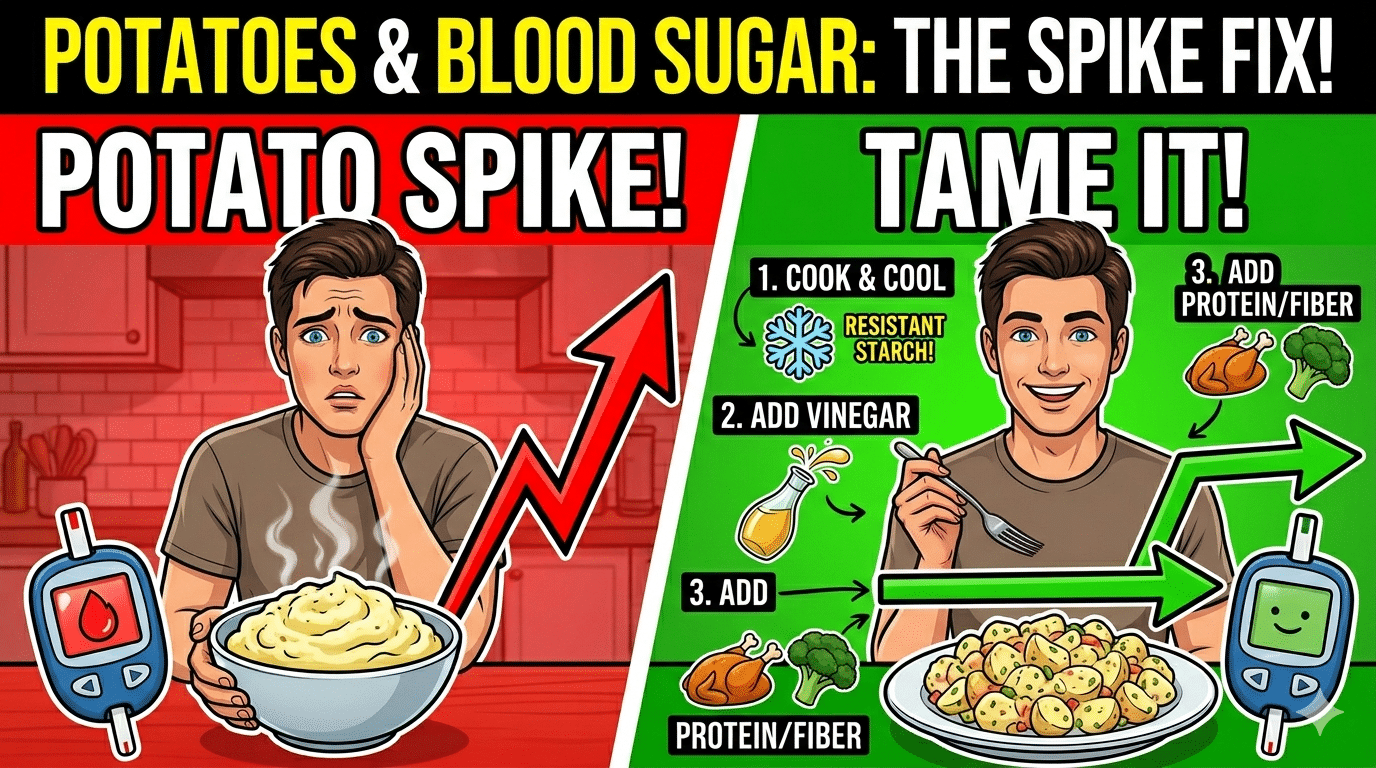
Cook potatoes, let them cool in the fridge for 12–24 hours (or even overnight), then reheat gently or eat them cold. This process turns a large portion of the digestible starch into resistant starch — a type of fiber your small intestine can’t break down. Instead of spiking blood sugar, it travels to the colon where good bacteria ferment it, producing short-chain fatty acids that improve insulin sensitivity and reduce inflammation.
Research shows cooled and reheated potatoes can lower the blood-glucose response by 20–50% compared to hot potatoes. One study found a 44% reduction in the glycemic spike. For men over 40 this is huge: steadier energy, less fat storage, and better workout recovery.
How to do it right:
- Boil, bake, roast, or air-fry as usual
- Cool to room temperature, then refrigerate uncovered or loosely covered for at least 12 hours
- Reheat gently in the air fryer, oven at 350°F, or microwave on low — high heat destroys some resistant starch
- Red, fingerling, and new potatoes form the most resistant starch
Smart Pairings That Further Blunt the Spike
Never eat potatoes alone. Combine them with these blood-sugar-friendly additions:
- Protein — eggs, chicken, salmon, steak — slows digestion
- Healthy fat — olive oil, avocado, butter — further lowers the glycemic response
- Vinegar or lemon — a splash of apple-cider vinegar or lemon juice before or during the meal can reduce the spike by up to 30%
- Fiber-rich vegetables — broccoli, spinach, Brussels sprouts add volume and slow absorption
Example winning plate: cooled roasted potatoes + grilled chicken + big serving of broccoli drizzled with olive oil and a squeeze of lemon.
Portion, Timing & Lifestyle Hacks That Make a Difference
Even cooled potatoes can spike blood sugar if you eat too much. Stick to 4–6 oz (about the size of your fist) per meal. Eat potatoes earlier in the day when your body is more insulin-sensitive, and always follow the meal with a 10–15 minute walk — this alone can cut the post-meal spike significantly. Lifting weights earlier in the day also improves how your body handles carbs later.
7-Day Meal Template: Potatoes Without the Spike
Each day uses cooled potatoes in a balanced, muscle-friendly way.
- Breakfast — Cooled roasted potatoes + 4 eggs + spinach
- Lunch — Tuna salad with cooled potato chunks, celery, olive oil, and lemon
- Dinner — Grilled salmon or steak + cooled fingerling potatoes + roasted broccoli
- Post-Workout Snack — Cooled potato wedges with Greek yogurt dip
This template keeps carbs moderate, protein high, and blood sugar stable while letting you enjoy potatoes 4–5 times per week.
Common Mistakes That Still Cause Spikes
- Eating potatoes hot right after cooking
- Large portions without protein or fat
- Pairing with more carbs (rice, bread, sugary sauces)
- Skipping the post-meal walk
- Using instant mashed potatoes or French fries (highly processed)
You Can Keep Potatoes and Stay Lean and Energized
Potatoes don’t have to be off-limits. By cooling them after cooking, pairing them smartly, controlling portions, and adding a short walk, you can enjoy potatoes regularly while keeping blood sugar steady, supporting fat loss, and fueling hard training. The strategies in this guide are simple, cheap, and effective for men over 40 who want results without giving up the foods they love.
Start this week: make a big batch of potatoes, cool them overnight, and use them in two meals. You’ll feel the difference in energy and how your body responds. Small, consistent changes like this are what separate guys who stay lean after 40 from those who don’t.
Your body is listening. Give it the right signals with smarter potato habits and it will reward you with better energy, faster recovery, and easier fat loss.
Want weekly meal plans that include smart carb strategies, full DadBod40 programs, and training designed for men over 40? Join the free newsletter here — real food, real results, real life.
About the Author

J.V. CHARLES – DadBod40
Helping men over 40 build strength, lose fat, and stay healthy — with practical, science-backed nutrition strategies that fit real life and actually deliver results.