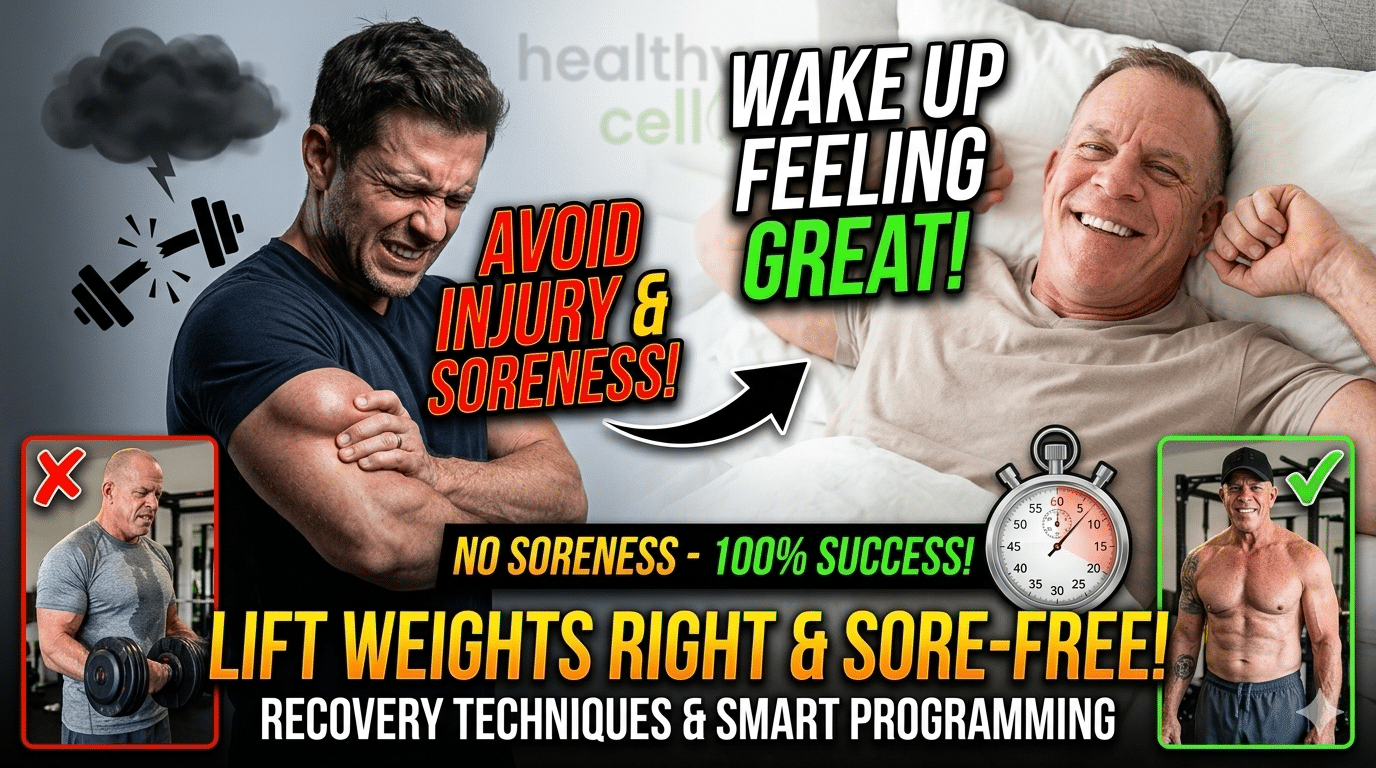
How to Lift Weights Without Waking Up Sore and Injured
Remember your 20s? You could stumble into the gym entirely cold, load three plates onto a barbell, drop into a ragged squat with terrible form, finish off with a fast-food meal, and wake up the next morning feeling utterly invincible. Your body possessed a radical capacity to heal itself despite your worst decisions.
Welcome to your 40s. Try that exact same strategy today, and you’ll wake up looking for your physical therapist’s phone number. Your lower back feels compressed, your shoulders crunch like dried leaves, and a deep, systemic ache makes simply getting out of bed feel like a major athletic event.
At DadBod40, we reject the idea that aging must look like this. Chronic soreness and frequent injuries are not the mandatory taxes you pay for staying fit. They are simply symptoms of a deeply outdated, ego-driven approach to physical culture. In 2026, training longevity is built on precision, biomechanical intelligence, and deliberate systemic recovery. It's time to shift away from "no pain, no gain" to a strategic protocol that builds muscle without tearing down your structural framework.
The Biological Shift: Why the Rules Changed After 40
To end the cycle of chronic soreness, you have to understand why your 40-year-old muscle tissues behave differently than they did two decades ago. When we lift weights, we create micro-tears in our muscle fibers. The body mends these tears via a cellular process called muscle protein synthesis, resulting in larger, denser muscles.
However, as we age, several key biological parameters shift:
- Reduced Satellite Cell Activity: Satellite cells are the muscle stem cells responsible for repairing damaged tissue. After age 40, their recruitment efficiency drops significantly, which delays your overall recovery timeline.
- Decreased Collagen Synthesis: Your tendons and ligaments lose their natural elasticity. They become stiffer and less forgiving of sudden, explosive forces, making them hyper-susceptible to tendonitis and strains.
- Blunted Anabolic Signaling: Natural drops in growth hormone and testosterone mean your body requires a cleaner internal environment (less systemic stress and better nutrition) to initiate the exact same level of tissue repair.
If you apply 20-year-old training volumes and intensities to a 40-year-old biological framework, you aren't stimulating adaptation—you are merely compounding deep structural damage. The result? You cross the thin line separating standard muscle soreness from an actual musculoskeletal injury.
Soreness vs. Injury: How to Correctly Diagnose the Pain
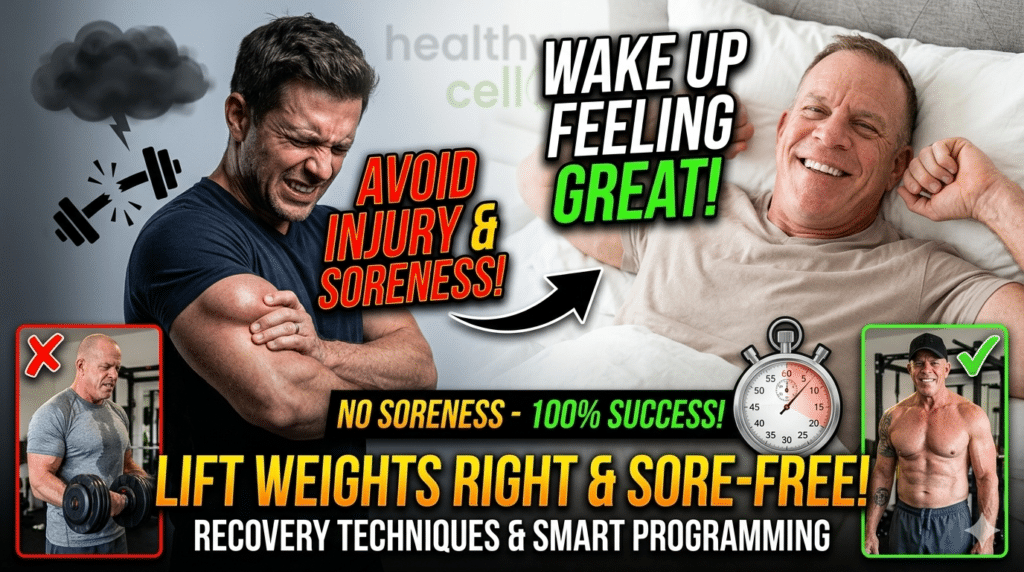
A crucial element of your long-term survival is learning to accurately interpret the signals your body sends you. Not all pain is created equal. Misdiagnosing structural joint damage as simple muscle soreness is the fastest way to turn a minor tweak into a chronic, season-ending injury.
| Diagnostic Variable | Functional Soreness (DOMS) | Structural Injury (Danger Zone) |
|---|---|---|
| Onset Timeline | Develops gradually 12 to 36 hours post-workout. | Occurs sharply during a lift or presents instantly the next morning. |
| Sensation Quality | Dull, diffuse, muscular ache that yields to stretching. | Sharp, localized, stabbing, or radiating electrical pain. |
| Location Type | Centered squarely in the belly of the muscle tissue. | Located directly inside a joint socket, tendon, or ligament hook. |
| Movement Effect | Soreness diminishes significantly as you warm up and move. | Pain escalates rapidly with loading or specific joint angles. |
The 4 Pillars of Pain-Free Lifting
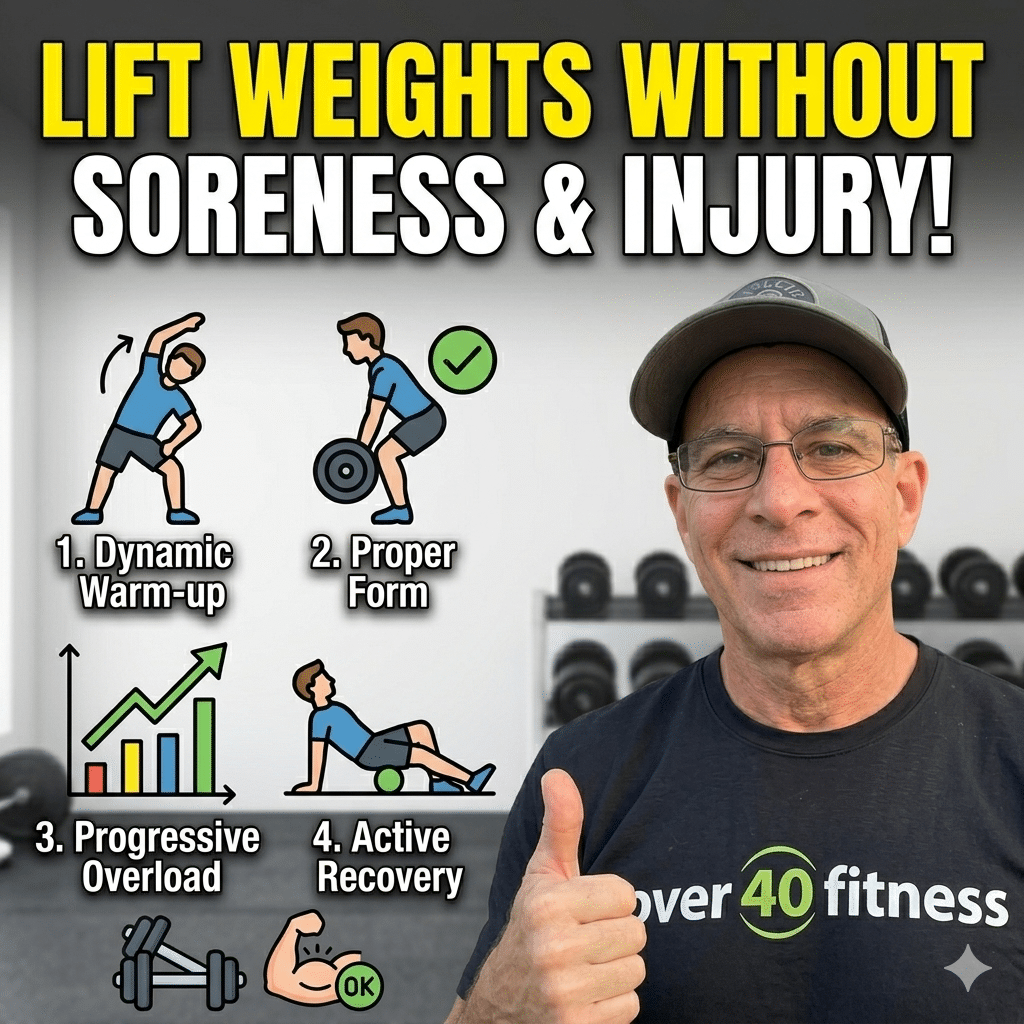
To eliminate post-workout physical wreckage, you must install structural guardrails directly into your training strategy. Implement these four systemic pillars to shift your training paradigm.
1. Master the RIR (Reps in Reserve) Protocol
The old-school bodybuilding dogma states that every set must be taken to absolute muscular failure. For the mature man, this is absolute poison. Training to complete failure overtaxes the central nervous system (CNS) and degrades your lifting form during the final reps, placing the massive weight load directly onto vulnerable joints rather than the target muscle.
Instead, utilize **Reps in Reserve (RIR)**. If you are executing a set of dumbbell presses where you could max out at 12 repetitions before your form crumbles, stop the set at 10 reps. This leaves exactly 2 RIR. Research consistently demonstrates that training with 1 to 2 reps left in the tank delivers identical muscle growth to training to failure, but cuts your total recovery time in half and completely bypasses joint degradation.
2. Ditch the Straight Barbells
Straight barbells lock your body into an artificial, fixed plane of movement. If your wrists, elbows, or shoulders lack perfect mobility, a barbell forces your joints to absorb the twisting shearing forces.
Shift your equipment choices exclusively toward **joint-friendly alternatives**:
- Use Neutral Grips: Utilize dumbbells or Swiss bars that allow your palms to face each other. This clears room in your shoulder joint space, preventing tendon impingement.
- Emphasize Cables and Injection-Molded Machine Paths: High-quality cable setups provide constant muscle tension without relying on explosive momentum, keeping your tendons perfectly safe throughout the entire range of motion.
3. Lubricate the Joints with Dynamic Pumping
Static stretching before lifting weights does not prevent injury; in fact, research shows it can temporarily reduce muscle power output. Your joints are avascular, meaning they do not possess a direct blood supply. They rely entirely on movement to secrete **synovial fluid**, which acts as your body's internal motor oil.
Before touching a working weight, spend 5 minutes executing high-repetition, ultra-light variations of your target movements. If you are bench pressing, perform 25 reps of very light cable pressdowns or band pull-aparts. This physically pumps blood into surrounding tissues and floods the joint capsule with synovial fluid, creating a thick, protective cushion before the heavy loads arrive.
4. Force a Parasympathetic Down-Shift Post-Workout
Your recovery doesn't start hours after you leave the gym; it starts the exact second your final set ends. Intense lifting keeps your nervous system locked in a sympathetic, fight-or-flight state. While you remain in this state, your body actively blocks the recovery process.
Don't immediately sprint from the gym floor to your car while checking work emails. Spend 3 minutes lying flat on your back with your legs elevated on a bench. Close your eyes and practice **Box Breathing**: inhale for 4 seconds, hold for 4 seconds, exhale for 4 seconds, and hold for 4 seconds. This simple act tells your autonomic nervous system that the threat has passed, triggering an immediate shift into the parasympathetic, rest-and-digest state that jumpstarts cellular tissue repair.
Conclusion: Honor the Machine
Waking up in agonizing pain is not a reflection of your hard work; it is a reflection of a flawed system. Real mental toughness isn't about blindingly enduring avoidable physical damage—it's about having the discipline to train with intellectual precision. By leaving ego at the door, utilizing Reps in Reserve, respecting your changing biology, and actively managing your nervous system, you can build a formidable, athletic physique that serves you instead of slowing you down. Treat your body like a high-performance machine, execute the maintenance protocols, and dominate the long game.

Joshua Van
Joshua Van is the founder and senior editor of DadBod40. A veteran consultant in human kinetics, mature male metabolism, and injury-prevention protocols, Joshua dedicates his work to helping busy fathers and professionals over 40 build lasting functional capability. He believes physical longevity is the ultimate metric of true strength.