
Exercise can boost your memory and thinking skills
If you're reading this at DadBod40, you’ve likely noticed a frustrating trend. It’s not just that the belly is harder to lose or the knees groan more in the morning—it’s the "mental fog." You forget the name of a client, you lose focus during that 2 PM presentation, and your decision-making feels slightly sluggish compared to your 20s.
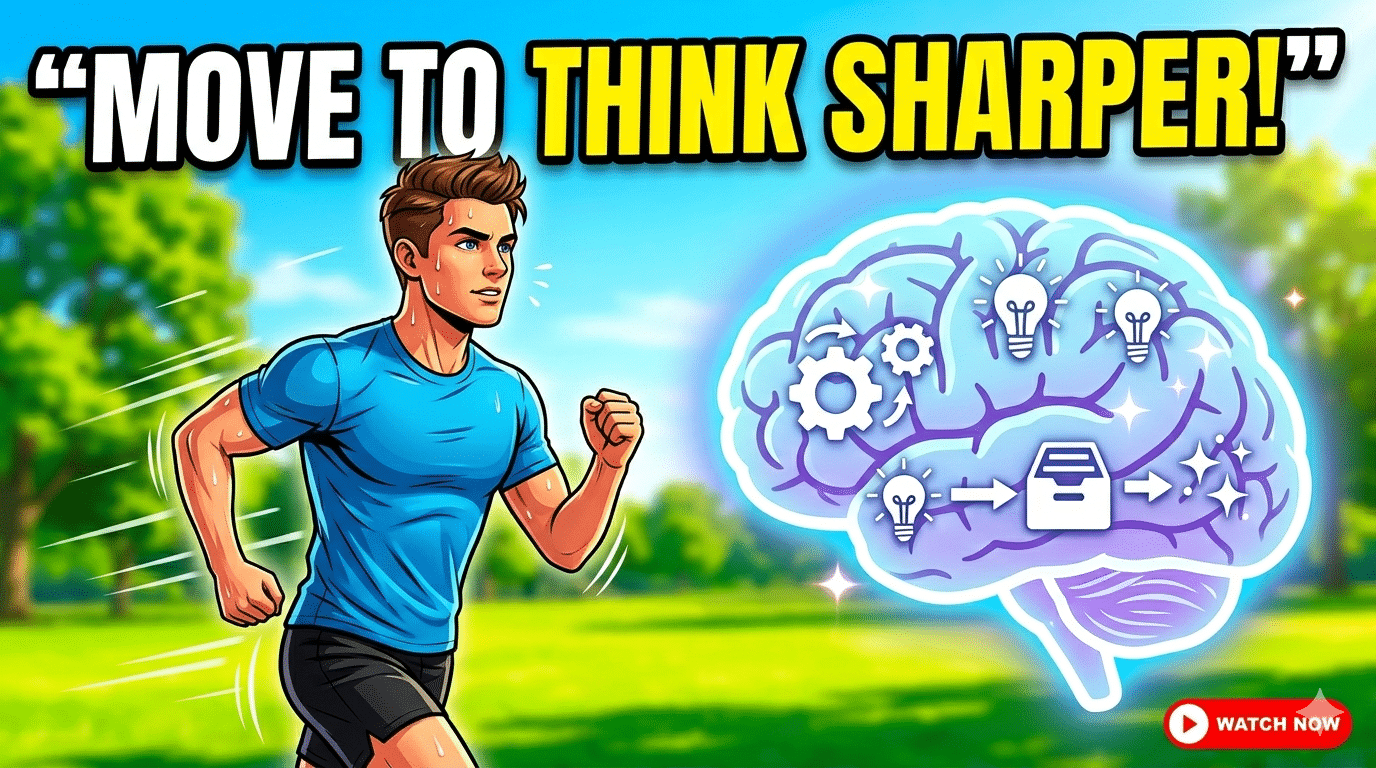
Most men over 40 write this off as "aging." We’ve been lied to, told that the brain is a one-way street toward decline. But the latest 2026 neuroscience tells a different story. Physical exercise is the most powerful cognitive enhancer ever discovered. It is the ultimate "brain hack" to boost memory, sharpen thinking skills, and keep you at the top of your game while everyone else is fading out.
The Biological Software Upgrade
Your brain is a metabolically expensive organ. It demands high-quality blood flow and specific chemical signals to maintain its architecture. When you stop moving, your brain literally begins to prune itself. When you exercise, you initiate a software upgrade that impacts three critical areas of performance.
The secret sauce is Brain-Derived Neurotrophic Factor (BDNF). Think of BDNF as a high-octane fertilizer for your neurons. When you perform intense exercise, your body releases this protein, which repairs damaged brain cells and facilitates neurogenesis—the creation of brand-new neurons. For a man over 40, BDNF is the primary defense against age-related cognitive decline.
The hippocampus is the part of the brain responsible for verbal memory and learning. In sedentary adults, this region shrinks by about 1% annually. However, research has proven that consistent aerobic exercise can actually increase the volume of the hippocampus. You aren't just slowing down memory loss; you are physically expanding your hard drive.
Executive Function and the Frontal Lobe
Thinking skills—specifically "executive function"—involve your ability to plan, organize, and focus. This happens in the prefrontal cortex. Exercise improves the vascular health of this region, ensuring that when you need to make a high-stakes decision, your brain has the oxygenated blood it needs to fire on all cylinders.
| Metric | Sedentary Brain | The DadBod40 Brain |
|---|---|---|
| Memory Retention | Declining | Enhanced (High BDNF) |
| Mental Processing Speed | Slowing | Fast (High Oxygenation) |
| Stress Resilience | Brittle | Resilient (Low Cortisol) |
| Focus Duration | Short/Fragmented | Deep/Sustained |
The Best Training Protocols for Brain Power
Not all workouts are created equal when it comes to the mind. To get the 1,200-word results you're looking for, you need a balanced attack strategy.
1. Aerobic Intensity: The Memory Builder
The most significant gains in BDNF come from aerobic exercise. This means getting your heart rate into Zone 2 or Zone 3 for at least 30 minutes. Whether it’s a brisk walk, a light jog, or cycling, this "steady state" cardio clears out metabolic waste and floods the brain with growth factors.
2. Resistance Training: The Focus Sharpener
Lifting heavy things isn't just for muscles. Strength training has been shown to improve executive function and complex reasoning. The "mind-muscle connection" required to move a heavy barbell forces the nervous system to coordinate complex signals, which sharpens your general thinking speed.
3. Coordination Drills: The Neural Connector
Activities that require you to think while you move—like Pickleball, boxing, or even complex agility ladder drills—are "dual-tasking." These exercises force the brain to map out movements in real-time, creating new neural pathways that simple treadmill walking cannot replicate.
If you're short on time, 15 minutes of High-Intensity Interval Training (HIIT) can produce a massive spike in norepinephrine and dopamine. This provides a "post-workout glow" that yields hyper-focus for 2 to 3 hours. Do your HIIT session before your most important work task of the day.
The Immediate vs. Cumulative Effect
One of the most motivating aspects of exercise for the brain is that the benefits are both instant and long-term.
Immediately: After a 20-minute workout, blood flow to the brain increases by up to 25%. You’ll experience better mood and sharper focus immediately. This is your "tactical" advantage.
Cumulatively: Over months and years, you build what neurologists call "Cognitive Reserve." This is a buffer that protects you against dementia and Alzheimer’s. By training hard in your 40s and 50s, you are essentially buying insurance for your 70s and 80s.
Overcoming the "Busy Dad" Trap
We get it. You have a job, a mortgage, and kids who need to be driven to soccer practice. Finding an hour for the gym feels impossible. But brain health doesn't require a 2-hour "bro-split.
- The 10-Minute Morning Walk: Sunlight + Movement = Resetting your circadian rhythm and boosting morning focus.
- The Office Kettlebell: 20 swings every hour on the hour keeps the blood from pooling in your legs and keeps your brain oxygenated.
- Active Play: Wrestling with the kids or playing tag is legitimate "unstructured" agility training that challenges the brain.
The Lifestyle Pillars: Sleep and Nutrition
You cannot exercise your way out of a bad lifestyle. To maximize the cognitive benefits of your training, you must address the foundation.
Sleep: It is during sleep that the brain's "Glymphatic System" flushes out toxins (beta-amyloid) that cause brain fog. Exercise helps you sleep deeper, but you must prioritize the 7-hour window.
Omega-3s: Your brain is 60% fat. Supplementing with high-quality fish oil provides the raw materials for the new brain cells your exercise is stimulating.
The Bottom Line: Leading from the Front
At DadBod40, we believe that fitness is about more than just a six-pack. It’s about being the most capable version of yourself for your family, your career, and your future. A sharp mind is your most valuable asset.
The "Dad Bod" might be a cultural joke, but a "Dad Brain"—one that is forgetful, sluggish, and tired—is a choice. By prioritizing movement, you are reclaiming your edge. You are proving that age is a variable you can control.
Don’t wait for the fog to get thicker. Get out there, move your body, and wake up your brain.
Ready to level up your longevity? Join the DadBod40 Newsletter for more no-BS guides on staying strong, lean, and mentally sharp.

J.V. CHARLES – DadBod40
J.V. Charles is a performance researcher and strength coach dedicated to helping men navigate the physical and cognitive transitions of mid-life. He believes that your 40s should be the start of your prime, not the end of it.