Do Vitamin C Supplements Help Reduce Anxiety?
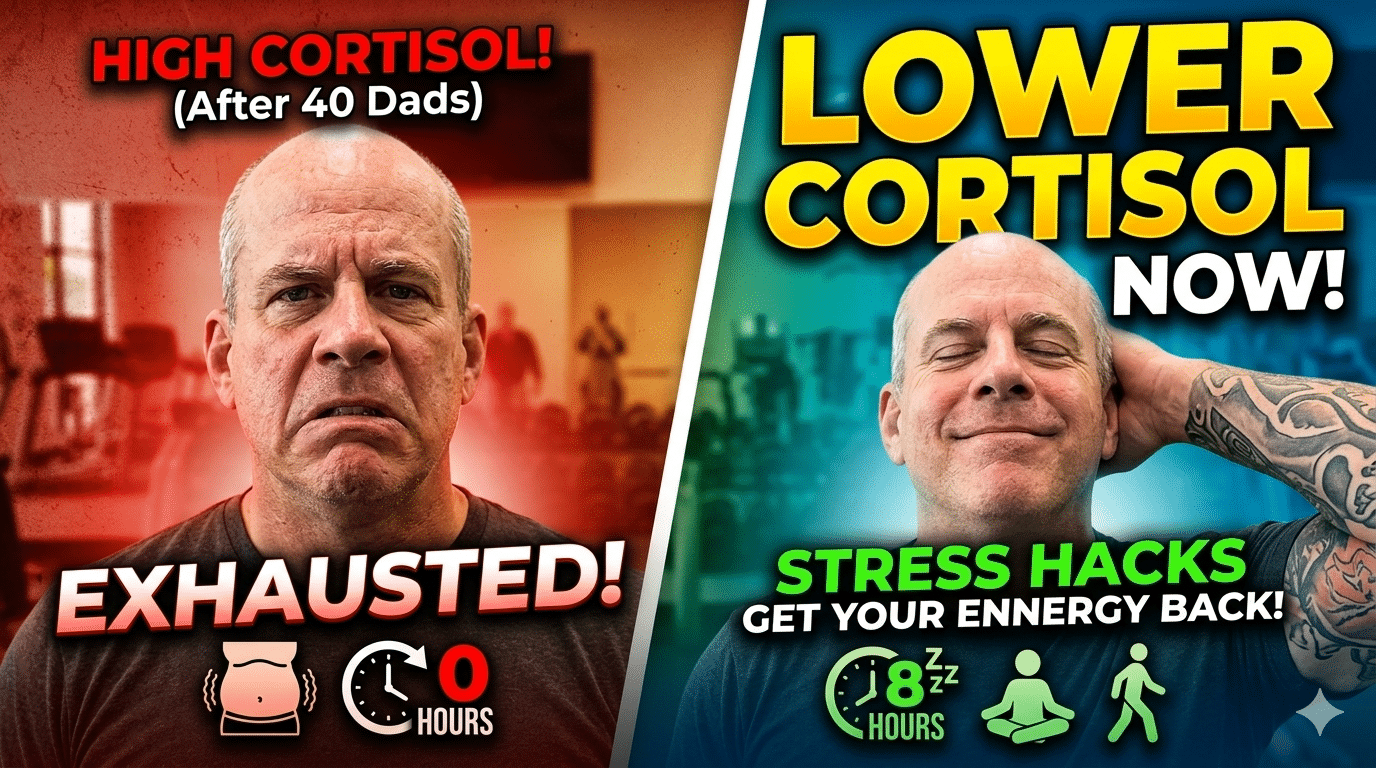
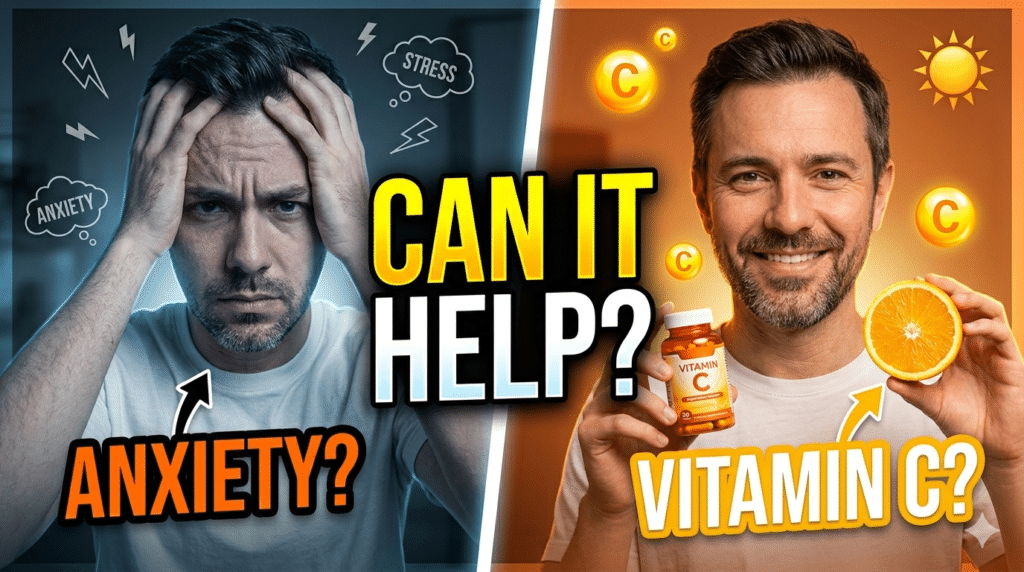
When we talk about anxiety at DadBod40, we aren't just talking about "feeling a bit nervous." We’re talking about the low-grade, constant hum of stress that characterizes life for men over 40. It’s the physiological pressure of balancing a career, a mortgage, and family, all while watching your testosterone levels naturally dip. For us, anxiety isn't just a mood—it's a metabolic drain that spikes cortisol, ruins sleep, and creates the dreaded "stress belly."
Most men reach for caffeine to push through or a drink to wind down. But what if the solution to moderating your body's "fight or flight" response was as simple as a basic micronutrient? In this deep dive, we’re looking at Vitamin C (Ascorbic Acid) not as a cold remedy, but as a high-leverage biological shield against anxiety and the hormonal havoc it wreaks.
The Adrenal Connection: Why Your Body Craves Vitamin C
To understand Vitamin C’s role in anxiety, you have to look at the adrenal glands. These two small caps sitting atop your kidneys are the command centers for your stress response. Interestingly, the adrenal glands contain one of the highest concentrations of Vitamin C in the entire human body.
When you encounter a stressor—be it a deadline or a heavy set of squats—your adrenals dump cortisol and adrenaline into your system. Vitamin C is a critical cofactor in this process. Chemically, Ascorbic Acid ($C_6H_8O_6$) acts as a regulator. During periods of chronic anxiety, your Vitamin C stores are rapidly depleted. If you don't replenish them, your adrenals lose their "brakes," leading to an exaggerated and prolonged cortisol spike.
For men over 40, cortisol is the enemy of progress. Cortisol and Testosterone have an inverse relationship. When cortisol stays elevated due to anxiety, your body enters a catabolic state. High cortisol signals the body to store visceral fat and break down muscle tissue. By using Vitamin C to blunt the cortisol response, you are effectively protecting your T-levels from the "stress tax."
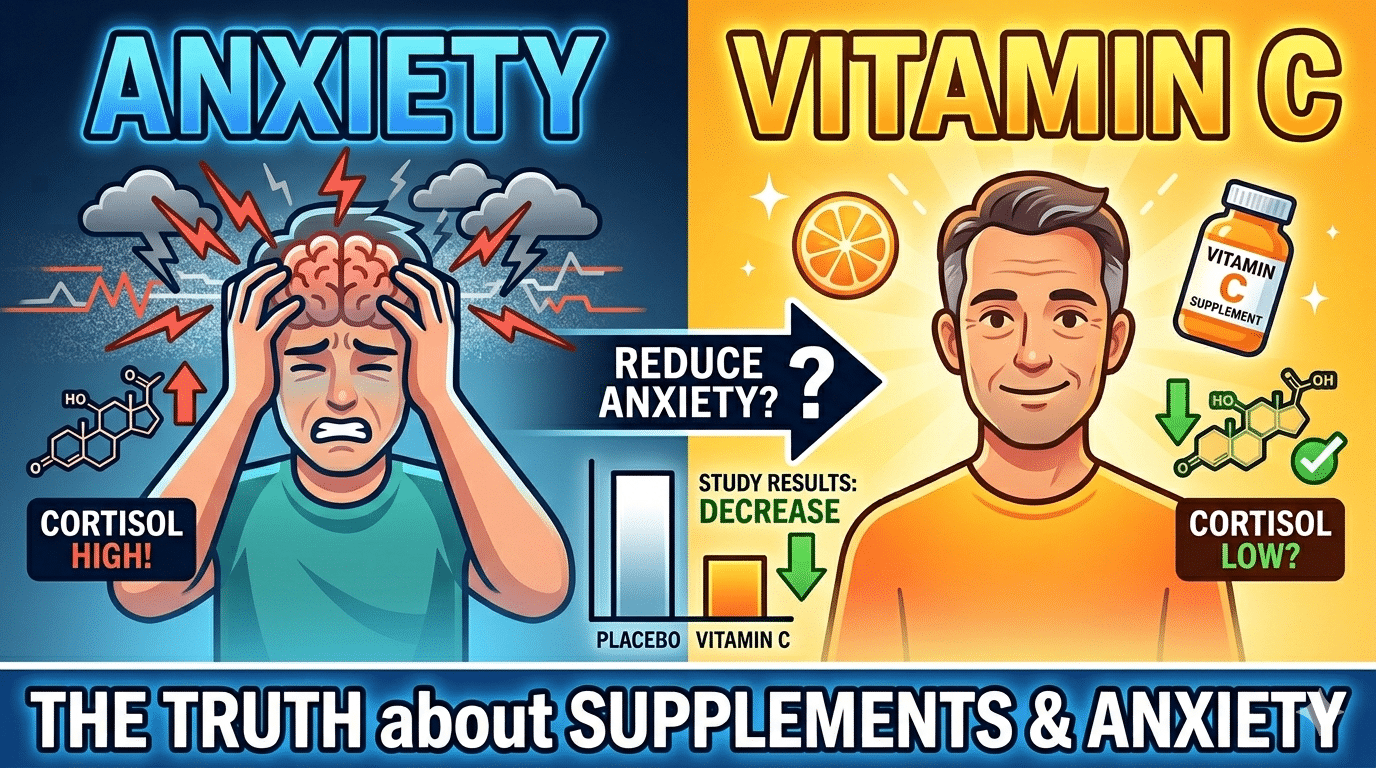
What the Research Says: Vitamin C vs. Anxiety
The scientific literature on Vitamin C and mood has matured significantly in recent years. A notable study published in Pakistan Journal of Biological Sciences observed that high-dose Vitamin C supplementation significantly reduced anxiety levels in students. While students aren't "dads over 40," the biological mechanism remains the same: the reduction of oxidative stress in the brain.
Anxiety is often linked to a high level of oxidative stress and inflammation in the central nervous system. Vitamin C crosses the blood-brain barrier and neutralizes free radicals that can interfere with neurotransmitter function. Specifically, Vitamin C modulates the release of Glutamate (the brain’s primary excitatory chemical) and GABA (the "calm down" chemical). When your brain has sufficient Vitamin C, it’s much better at maintaining the balance between these two, preventing the "racing thoughts" associated with clinical anxiety.
"Vitamin C is more than an antioxidant; it is a neuro-modulator that dictates how aggressively our brain reacts to environmental pressure."
High-Leverage Nutrition: Food vs. Supplements
At DadBod40, we always advocate for a "Food First" approach, but we recognize the limitations of the modern diet. During peak stress periods, your biological demand for Vitamin C can skyrocket beyond what a few oranges can provide.
| Source | Vitamin C Content | DadBod40 Rating |
|---|---|---|
| Bell Peppers (Red) | 190mg per cup | Elite - Low Calorie |
| Guava | 377mg per cup | Superior - High Fiber |
| Standard Supplement | 500mg - 1000mg | Convenient - MED |
| Liposomal Supplement | 1000mg | Best for Absorption |
The Case for Supplementation
If you are in a "high-anxiety season" of life, supplementation offers the **Minimum Effective Dose (MED)** with zero friction. The standard RDA (Recommended Dietary Allowance) for Vitamin C is around 90mg for men. However, for anxiety reduction and cortisol modulation, the literature suggests doses in the 500mg to 1,000mg range.
Since Vitamin C is water-soluble, your body cannot store it for long. If you take 2,000mg at once, you’ll likely just create expensive urine. The smart play? Split your dose: 500mg in the morning and 500mg in the late afternoon when your work stress typically peaks.
Potential Side Effects: The "Gut Check"
Is there a downside? Vitamin C is remarkably safe, but it is an acid. High doses of standard Ascorbic Acid can cause gastric distress or a laxative effect in some men. If you have a sensitive stomach, look for **Buffered Vitamin C** (usually bound to minerals like calcium or magnesium) or **Liposomal Vitamin C**, which uses fats to bypass the digestive hurdles and get straight into the bloodstream.
The DadBod40 Verdict: Is It Worth It?
Is Vitamin C a "cure" for anxiety? No. It won't pay your bills or fix a broken relationship. However, as a piece of biological insurance, it is one of the cheapest and most effective tools in your kit. By keeping your adrenal stores topped off, you ensure that when stress hits, your body has the raw materials to handle it without sending your cortisol—and your waistline—into a tailspin.
The Protocol
If you’re feeling the weight of the world, try this 14-day experiment:
- Morning: 500mg Vitamin C with breakfast.
- Afternoon: 500mg Vitamin C (around 3 PM).
- Daily: At least one whole-food source (Peppers, Broccoli, or Citrus).
Notice your "reactivity." Are you less likely to snap at the kids? Do you feel less drained at 5 PM? The data suggests you will.
For more no-nonsense guides on hormonal health and metabolic optimization for men over 40, join the DadBod40 newsletter. We don't do fluff; we do results.

J.V. CHARLES – DadBod40
J.V. Charles is a fitness and nutrition strategist specializing in the unique physiological needs of men over 40. He focuses on "high-leverage" habits that maximize testosterone, minimize stress, and build a body that lasts.