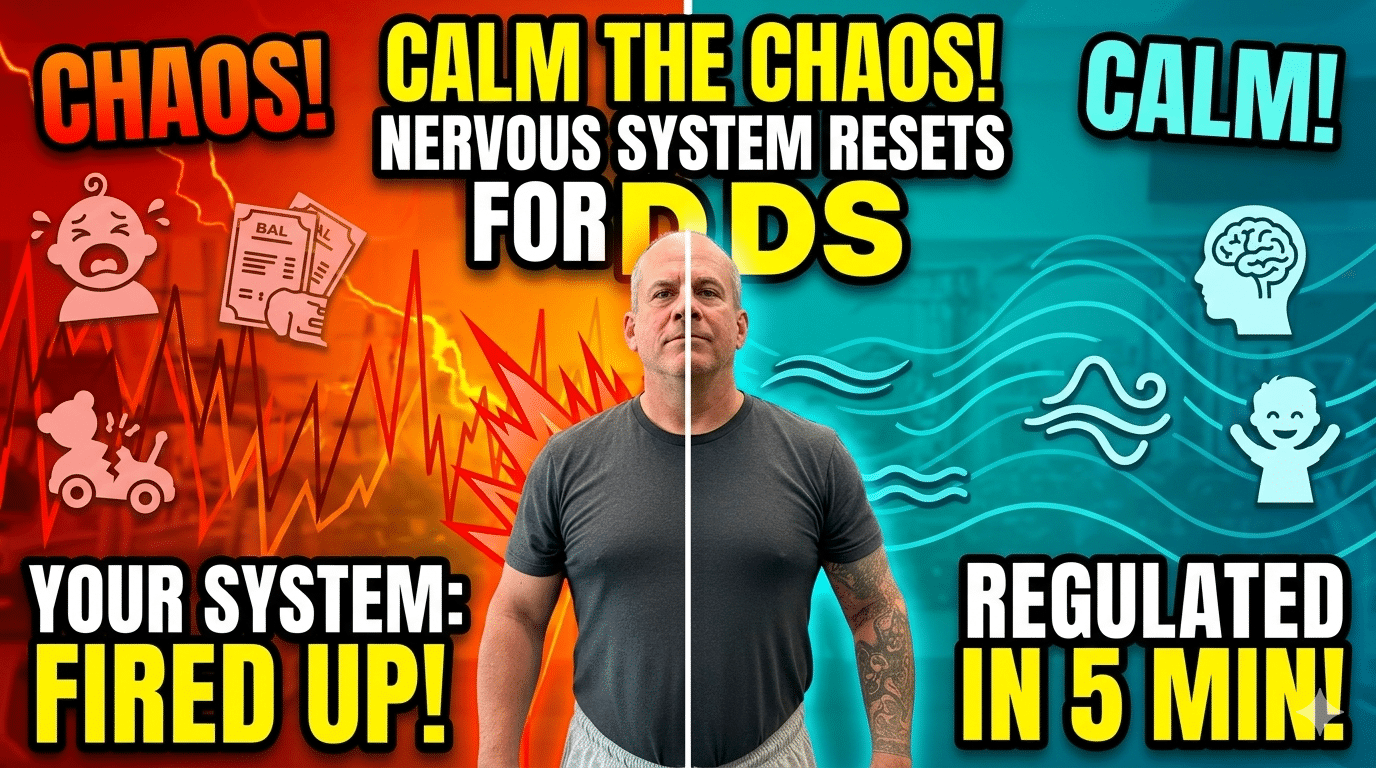
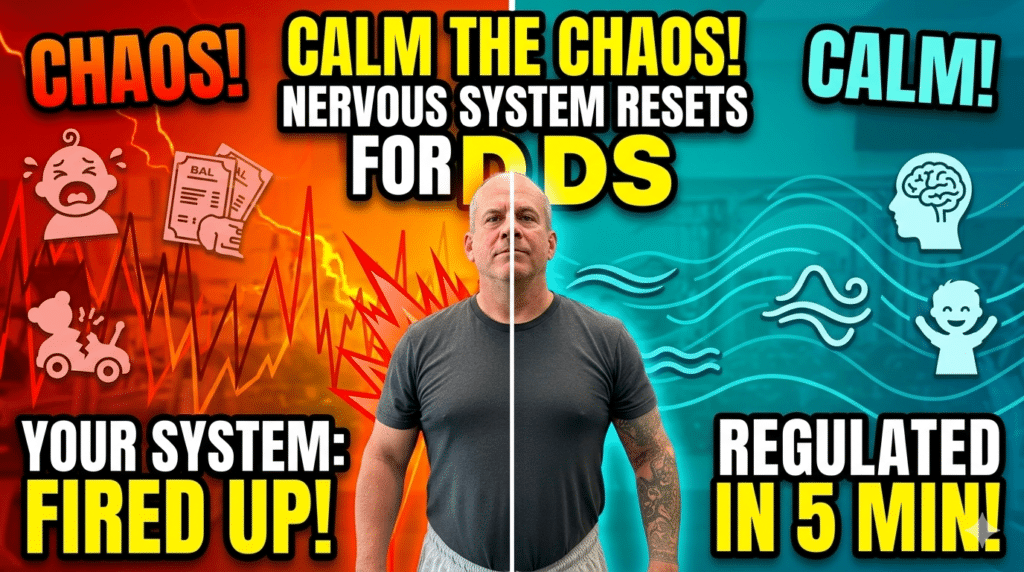
Calm the Chaos: Nervous System Regulation Hacks for Stressed Dads
It is 5:45 PM. You just logged out of a high-friction executive sync that tested every ounce of your patience. Your phone is buzzing with unread Slack messages. You walk into the kitchen, and your toddler is mid-meltdown because their sandwich was cut into triangles instead of squares.
You feel a tightness in your chest. Your jaw is clenched. Your breathing is shallow, and your fuse is dangerously short.
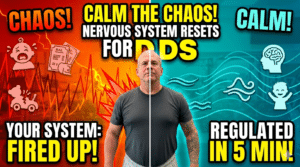
Society will tell you that you just need a vacation, or maybe a stiff drink. Biology tells a different story. Your Central Nervous System (CNS) is locked in a sympathetic "fight or flight" response. Your body doesn't know the difference between a looming corporate deadline and a physical predator. It simply dumps adrenaline and cortisol into your bloodstream and prepares you for war.
As a father over 40, you cannot be the stable, grounded anchor your family requires if you are constantly vibrating at a level 10 of anxiety. You need tactical, biological levers to pull that force your body to down-regulate. You need nervous system regulation.
The Machinery of Stress
Your nervous system essentially operates on a seesaw. On one side is the sympathetic state (action, stress, alertness). On the other is the parasympathetic state (rest, digest, recover).
Modern life—with its endless screen time, sleep deprivation, and caffeine reliance—keeps the modern dad permanently pinned on the sympathetic side. When you stay there too long, the biological consequences are severe: your resting heart rate elevates, your blood sugar spikes, and your testosterone plummets.
Tactical Hacks to Command Your Calm
If you want to reclaim your patience and protect your healthspan, you need interventions that hack your biology in real-time. Here are the tools to forcibly flip the switch from chaos to calm.
1. The Physiological Sigh
This is the fastest, scientifically validated way to slam the brakes on your stress response. Discovered by researchers observing human breathing patterns in claustrophobic environments, the physiological sigh directly activates your vagus nerve to rapidly lower your heart rate.
The Execution: Take two sharp inhales through the nose (one deep breath, followed by a quick top-off breath to fully expand the lungs). Then, execute one long, slow, extended exhale through the mouth. Do this 3 to 5 times in a row before you walk from your home office into the living room.
2. Optic Flow and Panoramic Vision
When you are stressed, your pupils dilate, and your vision physically narrows into a "tunnel" (a biological adaptation to focus on a threat). Staring intensely at a computer monitor or a smartphone screen mimics and reinforces this stress response.
The Execution: Step outside and engage in "optic flow." Go for a 10-minute walk without looking at your phone. Let your eyes soften and scan the horizon. Allowing visual information to pass by you in a panoramic view signals to your brain stem that there are no immediate predators, forcefully turning off the adrenaline drip.

| The Stressor | The Default Dad Reaction | The Regulated Executive Action |
|---|---|---|
| Mid-Day Brain Fog & Overwhelm | Chugging a 3rd cup of coffee at 2:00 PM. | 15 minutes of NSDR (Non-Sleep Deep Rest) or a quick cold splash to the face. |
| Post-Work Irritability | Pouring a stiff bourbon to "take the edge off." | The 5-minute transition protocol in the driveway using box breathing. |
| Late Night Racing Thoughts | Doomscrolling social media or answering emails in bed. | Analog disconnect. Reading a physical book or engaging in light mobility work. |
The Doomscrolling Trap
Many men believe that sitting on the couch and scrolling through social media or watching the news is "relaxing." It is not. It requires significant visual focus and cognitive processing, keeping your sympathetic nervous system engaged. True recovery demands an analog disengagement from the digital barrage.
3. Heavy Physical Outputs
Sometimes, the nervous system is so flooded with stress chemistry that deep breathing isn't enough; you have to burn the fuel off. If your sympathetic nervous system is begging for a fight, give it one—in a controlled environment.
The Execution: Engage in heavy resistance training. Pushing near-maximal loads on a deadlift, squat, or heavy sled push acts as an exhaust valve for trapped neurological energy. Once the physical effort is complete, your body has no choice but to rebound into a deep parasympathetic state of recovery.
Incorporate NSDR (Non-Sleep Deep Rest)
If you are running on 5 hours of broken sleep, your stress baseline is already elevated. Implement a 10-to-20-minute NSDR (or Yoga Nidra) protocol during your lunch break. This guided relaxation technique slows your brain waves to the brink of sleep, clearing cortisol from your system and restoring the equivalent of an hour of rest. Search for free, 10-minute NSDR scripts online and keep them queued on your phone.
Be the Thermostat, Not the Thermometer
A thermometer simply reacts to the temperature of the room. If the house is chaotic, the thermometer spikes. A thermostat, however, dictates the environment. It reads the chaos and adjusts itself to bring the temperature back down to a stable, optimal level.
As a father and a leader, your job is to be the thermostat. You cannot control the market crashes, the sick kids, or the endless demands on your time. But by actively managing your nervous system, you control your response. Master your biology, calm the chaos, and lead from a place of unshakeable presence.

Joshua Van
Joshua Van is the founder and senior editor of DadBod40. He’s helped thousands of men navigate the often-intimidating world of fitness after 40. Joshua believes that fitness is not a display of ego, but a foundational requirement for living a high-performance life as a father, professional, and man.