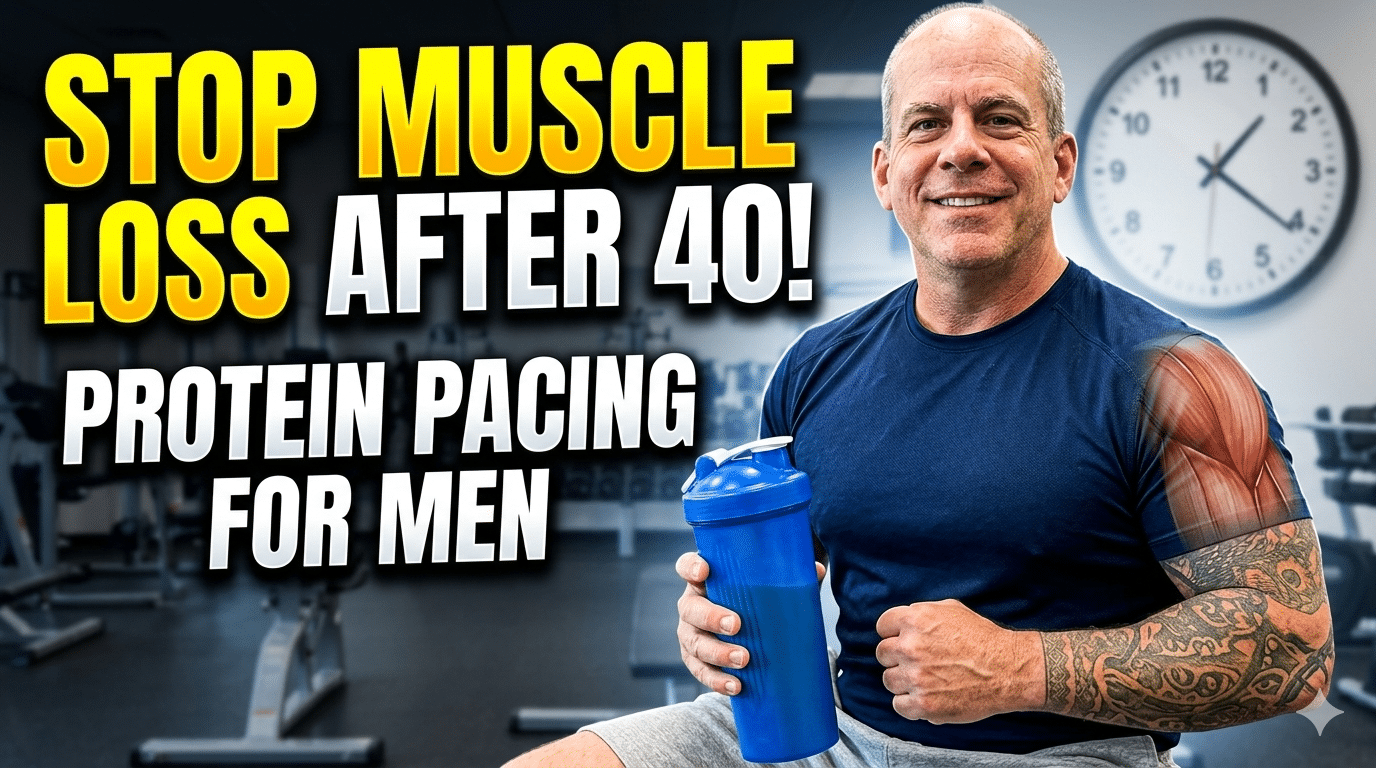

Protein Pacing for Men Over 40: How to Stop Muscle Loss as You Age
Think about a typical day of eating when you are slammed with work and family obligations. You rush out the door running entirely on black coffee. Lunch is a frantic afterthought—maybe a mediocre salad or a sandwich grabbed between calls. By 7:00 PM, you are starving. You sit down and crush a massive 14-ounce steak or a mountain of chicken with dinner, confidently telling yourself, "I got all my protein in for the day."
If you were 22 years old, that strategy would work perfectly fine. But you are over 40 now. And biologically speaking, dumping your entire daily protein intake into a single evening meal is a recipe for losing your hard-earned muscle, slowing your metabolism, and accelerating the aging process.
To defend your physique against age-related muscle decline, you have to change how you fuel your body. You don't just need to track your total daily numbers; you need to master the tactical science of Protein Pacing.
The Invisible Threat: Sarcopenia and Anabolic Resistance
Starting around age 30, the human body begins a slow, progressive decline in lean muscle mass known as sarcopenia. If left unchecked, the average man can lose 3% to 5% of his muscle mass per decade. This isn't just about vanity or losing your biceps; losing muscle degrades your joint health, lowers your testosterone, and compromises your metabolic health.
Compounding this issue is a frustrating physiological shift called anabolic resistance. As we cross into our 40s, our muscles become less responsive to the muscle-building signals sent by resistance training and amino acids.
When you are young, your body is highly sensitive to protein; even a small amount can trigger muscle repair. After 40, your cells require a much louder signal to turn on the biological machinery responsible for building and preserving muscle. Eating a tiny amount of protein at breakfast and a massive amount at dinner fails to provide that consistent signal.

What is Protein Pacing?
Protein pacing is the strategic distribution of high-quality protein evenly across 4 to 5 distinct windows throughout your day.
To understand why this works, you need to understand Muscle Protein Synthesis (MPS)—the cellular process where your body repairs and rebuilds muscle tissue. To flip the switch on MPS, your blood must reach a specific concentration of an essential amino acid called leucine. This is known as the "leucine trigger."
For a man over 40, hitting that threshold requires roughly 30 to 40 grams of high-quality protein per meal.
- If you eat only 15 grams of protein at breakfast, you fail to hit the trigger. MPS stays turned off.
- If you eat 90 grams of protein at dinner, you hit the trigger, but your body can only utilize a portion of that for muscle repair at one time. The excess is burned for energy or stored.
By shifting to a paced model, you hit that crucial leucine trigger 4 to 5 times a day, maximizing your body's time in an anabolic (muscle-building) state while minimizing muscle wasting.
The Ideal Protein Pacing Blueprint
For a busy professional managing a household, tracking macronutrients down to the milligram is unrealistic. Instead, simplify the process by aiming for 30 to 50 grams of protein every 3 to 4 hours.
Here is an elite, highly actionable protein pacing schedule engineered to protect your lean mass without requiring hours in the kitchen:
| Time Window | Target Protein | Practical Dad-Friendly Fuel Options |
|---|---|---|
| 7:00 AM (Breakfast) | 35g - 45g | 4 whole eggs + 1 cup of liquid egg whites, or a high-quality whey isolate shake with oats. |
| 11:00 AM (Early Lunch) | 40g - 50g | 6-8 oz of grilled chicken breast or lean turkey over a bed of greens or rice. |
| 3:00 PM (Mid-Afternoon) | 30g - 40g | 1.5 cups of low-fat cottage cheese or Greek yogurt topped with almonds, or a convenient travel shake. |
| 7:00 PM (Dinner) | 45g - 55g | 8 oz of lean sirloin steak, salmon, or bison with roasted sweet potatoes and asparagus. |
| 10:00 PM (Before Bed) | 30g - 40g | (Optional for recovery) A scoop of slow-digesting micellar casein protein or a serving of Greek yogurt. |
The Power of Casein Before Bed
Your body goes through a prolonged fasting period while you sleep, which can lead to mild muscle breakdown. Consuming 30 grams of casein protein (found abundantly in cottage cheese and specialized powders) right before bed provides a slow, steady release of amino acids throughout the night, protecting your muscles until morning.
3 Rules to Make Protein Pacing Effortless
1. Never Skip the Morning Window
When you wake up, your body is in a catabolic (muscle-wasting) state because it has been fasting all night. Running out the door on an empty stomach extends that catabolic state deep into the afternoon. Break the fast with a mandatory, high-protein dose within an hour of waking up to immediately halt muscle loss.
2. Beware of Fake "Protein" Bars
When time gets tight, it is tempting to grab a commercially available protein bar. Read the label carefully. Many of these are glorified candy bars masquerading as health food, packed with sugar alcohols, low-quality soy isolates, and minimal actual bioavailable protein. Stick to whole foods or highly trusted whey/casein supplements.
Don't Forget the Heavy Iron
Protein pacing provides the bricks, but resistance training is the architect. To completely blunt anabolic resistance, you must combine strategic protein timing with progressive overload in the weight room. Lift heavy compound weights 3 to 4 times a week to force your body to utilize that protein for structural repairs.
3. Prep Your Protections on Sunday
You cannot execute this protocol if you are constantly improvising. Spend 45 minutes on Sunday cooking a massive batch of chicken breast, lean ground beef, or hard-boiled eggs. Portion them out into containers so that when your workday gets chaotic, your next muscle-saving meal is already waiting for you.
Forge a Resilient Physique
Maintaining a strong, athletic frame after 40 is not an impossible task; it simply requires moving away from youthful guesswork and embracing biological precision. By pacing your protein with precision, you optimize your internal biochemistry to burn fat, preserve strength, and maintain the energetic capability required to lead your family and your business.
Stop waiting for dinner to fuel your potential. Lock in your meal timing, protect your lean mass, and take complete control of your physical trajectory.

Joshua Van
Joshua Van is the founder and senior editor of DadBod40. He’s helped thousands of men navigate the often-intimidating world of fitness after 40. Joshua believes that fitness is not a display of ego, but a foundational requirement for living a high-performance life as a father, professional, and man.